YOUR NEIGHBOURHOOD MASSAGE STUDIO · MONTRÉAL
YOUR NEIGHBOURHOOD MASSAGE STUDIO · MONTRÉAL
Pregnancy changes everything about how your body feels. Your centre of gravity shifts. Your lower back takes load it was never designed to carry alone. Your hips widen. Fluid accumulates in your ankles and feet. Your sleep gets shorter, lighter and less restorative. Most of these changes are normal. They are also painful, exhausting and persistent — and they run for months without a real break.
Pregnancy massage, also called prenatal massage, is specifically structured for the physiological changes of the second and third trimesters. The positioning is different from standard massage — side-lying with bolsters and cushions to support the abdomen and reduce joint strain. The techniques are different — gentle Swedish strokes, lymphatic work for swelling, targeted pressure relief for the lower back and hips, without the deep tissue work that is contraindicated during pregnancy. The intention is different too. The goal is not to push tissue into compliance. It is to give your body structured relief from the specific load pregnancy places on it, reduce nervous system tension, and help you sleep and move better for the rest of the pregnancy.
At Spa New You on Saint-Jacques Street in Saint-Henri, our massage therapists work with pregnant clients from the second trimester through to the final weeks before birth, and with postpartum clients in the weeks following delivery. If you require an insurance receipt, please confirm therapist eligibility and receipt availability when booking. Same flat pricing every day, no weekend surcharge.
The most common physical complaint among pregnant clients in Montréal is lower back and sacroiliac pain. As the uterus grows and the centre of gravity shifts forward, the lumbar spine takes on a pronounced curve and the erector spinae, quadratus lumborum and gluteal muscles work constantly to compensate. They don't get to rest. This is why lower back pain in pregnancy is not a minor inconvenience — it is a structural load problem that builds over weeks and months. Pregnancy massage addresses this with side-lying positioning that takes the weight of the abdomen off the lumbar spine while targeted work is applied to the muscles that have been overloaded.
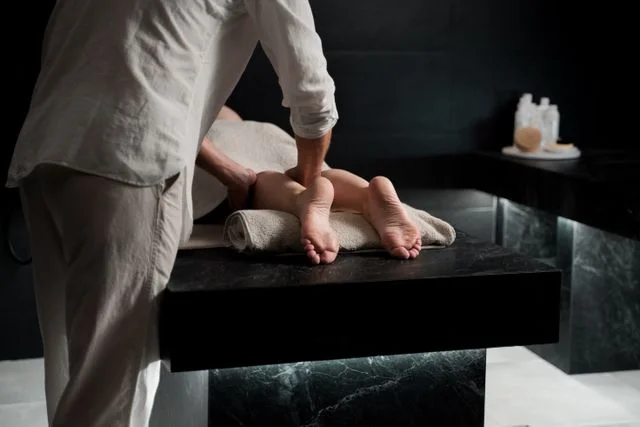
Swelling in the legs, ankles and feet is the second most common complaint. During pregnancy, blood volume increases by up to 50 percent and the growing uterus places pressure on the pelvic veins, reducing the efficiency of venous return from the lower extremities. The result is fluid accumulation — particularly after standing or sitting for long periods, which describes most working days in Montréal's office environments. Gentle lymphatic drainage strokes applied to the legs during pregnancy massage support fluid movement without applying the deep pressure that is contraindicated in pregnancy due to increased DVT risk. The reduction in swelling after a session is typically noticeable by the next morning.
Hip pain, round ligament discomfort and sciatic nerve irritation are the third cluster of pregnancy-related complaints that massage addresses directly. The round ligaments stretch as the uterus expands, creating a sharp, pulling sensation in the lower abdomen and groin that worsens with sudden movement. Sciatic pain develops when the expanding uterus and shifting pelvic bones place pressure on the sciatic nerve, sending pain down one or both legs. Side-lying positioning during the massage reduces the pelvic compression that exacerbates both, while work on the piriformis and gluteal muscles — common contributors to sciatic irritation — releases the muscular component of the pressure.
Beyond the physical structures, pregnancy massage consistently reduces cortisol and increases serotonin and dopamine in the clinical research, which translates practically to better sleep quality, reduced anxiety about the delivery and lower reported pain intensity in the following days. For clients in the final weeks of pregnancy dealing with the combination of physical discomfort and anticipatory stress, the nervous system effect of a well-executed prenatal session is as significant as the physical relief.
Pregnancy massage is not a standard relaxation massage performed with precautions. The positioning, techniques, pressure levels and contraindication screening are all specific. A therapist who has not been trained in prenatal work cannot safely adapt a standard session on the fly. Deep tissue work is off the table. Prone positioning — face down — is not appropriate after the first trimester regardless of what equipment a spa claims makes it safe. Certain acupressure points and pressure areas are avoided due to their association with uterine contractions. Your therapist at Spa New You screens specifically for these at the intake and structures every part of the session around what is appropriate for your stage of pregnancy.
Pregnancy massage is also not appropriate for every presentation. High-risk pregnancies, a history of preterm labour, active preeclampsia, placenta previa, unexplained vaginal bleeding, deep vein thrombosis or severe pregnancy-induced hypertension are absolute contraindications for massage. If your obstetrician, midwife or CLSC physician has placed restrictions on physical activity or manual therapies, bring that documentation to your intake. Your therapist will defer to the clinical guidance from your medical team and may adapt or decline the session based on what you report. This is the correct clinical approach, not a limitation of the service.

These are the five presentations we work with most often at Spa New You. If yours matches one of them, the session is built for you.
Lower back pain in pregnancy is so common that many clients assume nothing can be done about it outside of physiotherapy or chiropractic care. The truth is that the muscular component of pregnancy-related low back pain — the overloaded erectors, the tight QL, the compensating glutes — responds directly to massage. You are not going to reverse the structural cause, which is the load shift from the growing uterus. But you can give the muscles carrying that load a physiological reset that reduces the baseline pain level for several days after each session.
The effect is cumulative. Clients who come in monthly from the second trimester through to the final weeks report that their lower back pain is substantially more manageable than clients who try to get through the whole pregnancy without manual therapy. The structural load doesn't go away. The muscular response to that load does, temporarily, with each session. Monthly sessions give the muscles regular periods of recovery rather than months of continuous unmanaged tension.

Pregnancy-related swelling in the lower extremities is one of the most persistent and uncomfortable symptoms of the third trimester, particularly during Montréal's warmer months when heat compounds the fluid retention. Standing at a retail job in Verdun, commuting on the métro, sitting through a full workday in NDG — each of these extends the period of reduced venous return that accumulates into visible swelling by evening. Compression socks help. Elevating the feet helps. Neither addresses the fluid that has already accumulated by the time you get home.
The lymphatic drainage component of pregnancy massage moves accumulated fluid directly. The strokes are specific — slow, rhythmic, applied in the direction of lymphatic flow toward the inguinal nodes — and the effect is not subtle. Clients who come in with visible swelling in the feet and ankles typically leave with a measurable reduction. The next morning, the effect is even more pronounced because the lymphatic system continues working after the session. For clients dealing with third-trimester swelling as a daily quality-of-life issue, regular prenatal sessions are one of the most effective tools available.
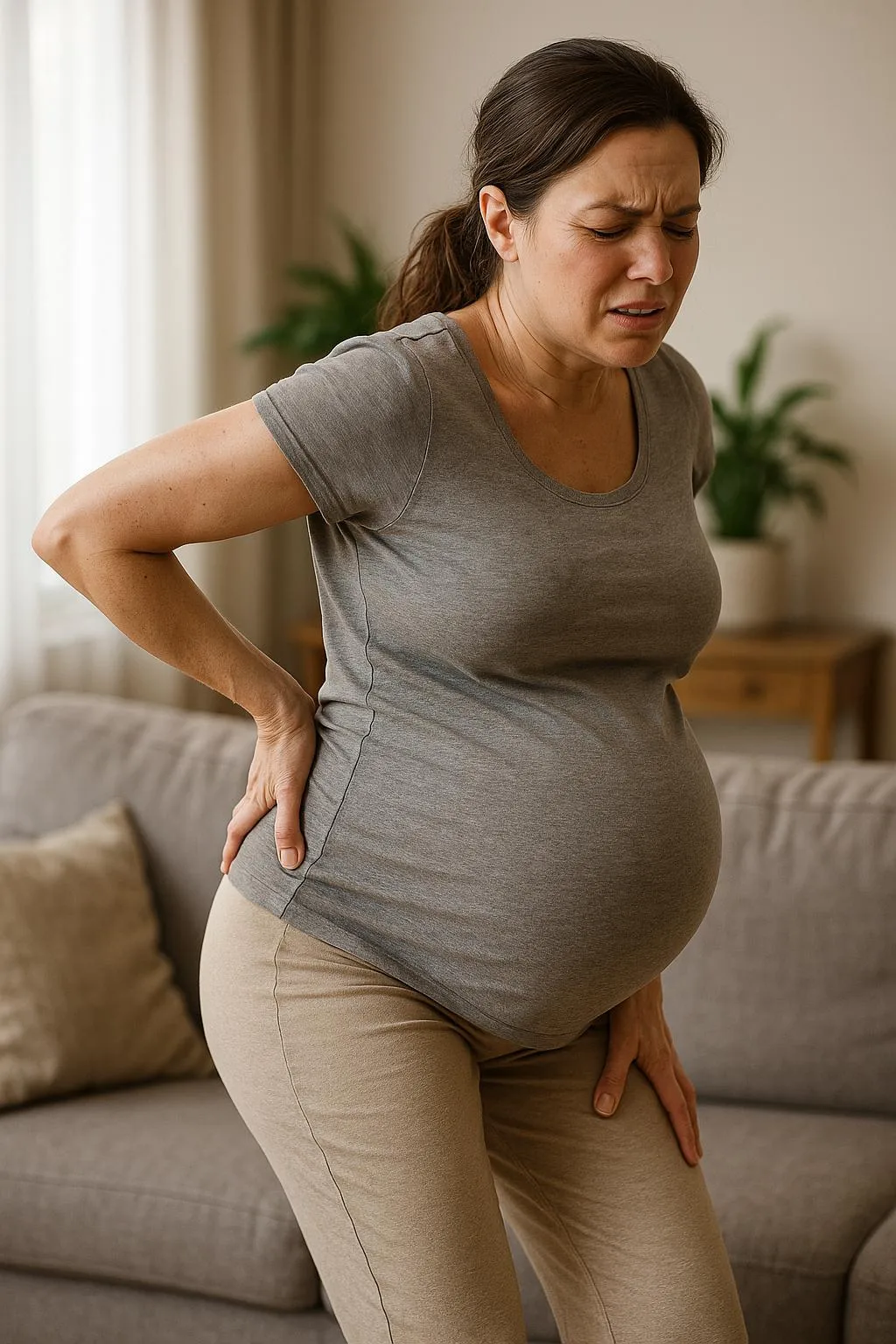
Sciatic pain in pregnancy affects a significant portion of clients in the second and third trimesters. The combination of a widening pelvis, shifting hormonal ligament laxity and a uterus that increasingly presses on the pelvic floor and surrounding structures creates conditions where the sciatic nerve gets irritated — either by direct pressure from the uterus, from piriformis muscle tightness, or from the altered movement patterns that develop when other areas are compensating. The pain ranges from a dull ache in the lower back and buttock to shooting pain down the back of the leg.
Massage cannot resolve the structural cause of pregnancy-related sciatica. What it can do is release the muscular tension — particularly in the piriformis and gluteus medius — that is compressing the nerve pathway, and position the body during the session to reduce the pressure that makes everything worse. Clients who come in with active sciatic pain consistently report relief that lasts several days after the session. For the portion of sciatic symptoms that are muscular rather than structural in origin, massage is often more immediately effective than any other conservative treatment.

Sleep quality deteriorates through the second and third trimesters for multiple reasons simultaneously — physical discomfort that makes every position uncomfortable, more frequent urination, restless legs, anxiety about the delivery and the newborn period, and a body that cannot regulate temperature as efficiently as usual. The result is a kind of compounding exhaustion that makes everything else harder: the back pain feels worse, the emotional variability increases, the ability to function at work or manage other relationships decreases.
Pregnancy massage addresses several contributors to poor sleep at once. The physical discomfort from back pain, hip tension and swelling is reduced directly. The cortisol reduction from the session lowers the nervous system activation that keeps sleep light and fragmented. Clients who schedule their prenatal sessions for the afternoon or early evening consistently report better sleep quality the night of and the night following the session. It is not a cure for all the reasons pregnancy disrupts sleep. It is a reliable way to improve sleep quality for two to three days per session, which adds up significantly over the course of a pregnancy.

The postpartum period gets less clinical attention than pregnancy even though the physical demands of new parenthood — nursing, carrying, bending, feeding at night, recovering from labour or caesarean section — are substantial. Most new parents in Montréal do not access massage in the first six weeks postpartum because they do not know when it is safe, they cannot get a referral, or they simply do not prioritize themselves when the baby is the focus. By the time they consider booking, three months have passed and the pattern of neglect is established.
For uncomplicated vaginal deliveries, massage is generally safe to begin four to six weeks postpartum. For caesarean births, the incision site needs to be fully healed — typically six to eight weeks — before any work near the lower abdomen is appropriate, and your therapist avoids the scar area until you have been cleared by your midwife or physician. Postpartum massage addresses the specific load patterns of new parenthood: upper trapezius and neck tension from nursing posture, lower back strain from lifting and carrying, the emotional and physical exhaustion of the newborn period. Bring your clearance information to the intake and your therapist builds the session around what your body is dealing with now.

Pregnancy massage at Spa New You follows a specific clinical sequence at every appointment. Here is exactly what happens so you know what to expect before you arrive.
Before your session begins, your therapist does the following:
The intake is not a formality. A prenatal session that is clinically appropriate for one presentation may need modification for another, and that modification starts before the session begins.
You are positioned on your side — typically the left side first, which improves circulation to the placenta and reduces inferior vena cava compression — supported by bolsters under the abdomen and between the knees. Your therapist adjusts the positioning based on what is comfortable for you and what allows the best access to the areas being worked. At no point during the session are you positioned face down or flat on your back for an extended period. Semi-reclined positioning may be used briefly for certain work but is adjusted based on comfort and gestational age.
The session opens with broad, slow Swedish strokes across the back, shoulders and upper trapezius — areas that carry significant postural load in pregnancy. The pace is slower than a standard relaxation session. Your therapist is reading tissue quality, identifying holding patterns and mapping what needs attention in the more targeted work that follows. Communication during this phase is normal. If anything is uncomfortable, too warm, or needs adjustment, say so and it changes immediately.
The focused work addresses the specific areas identified at intake — lower back and sacroiliac region, hip and gluteal complex, legs and ankles for swelling, neck and shoulder tension, whatever your primary complaints are. The pressure stays within the range appropriate for pregnancy. Deep tissue work is not applied anywhere on the body during a prenatal session. Certain areas — the ankles, the webbing between the thumb and index finger, certain points on the calves — are avoided or treated with minimal pressure due to their association with uterine stimulation in manual therapy practice.
The session closes with gentle work across the full back, a brief focus on the neck and scalp if that is comfortable, and time to rest before moving. You are not rushed off the table. Moving from side-lying to standing takes longer when you are pregnant and your therapist accounts for that. Dizziness and lightheadedness are more common in pregnancy after lying still — take your time sitting up and let your therapist help you get upright before standing.
Most clients leave feeling the combination of physically lighter and more settled. The lower back tension that was present on arrival is reduced. Swelling in the feet and ankles is often visibly less. The nervous system effect — a shift from a state of elevated cortisol to a more relaxed baseline — usually translates into better sleep the same night. Some clients feel mildly tired in the afternoon after a prenatal session; this is normal and resolves with rest.
For most clients, the effects of a single prenatal session are fully resolved within four to five days and the baseline returns. This is why monthly or biweekly sessions produce cumulative benefit — each session resets the baseline before it has fully re-established. Clients who begin monthly sessions in the second trimester and maintain them through the third report that their overall pregnancy discomfort level stays significantly lower than it would without regular treatment.
The lymphatic effect on swelling continues to develop overnight and is typically most noticeable the morning after the session. The relief from lower back and hip work also tends to peak on day two rather than immediately after the session as the tissues settle. Clients who come in with sciatic symptoms often report that the pain is substantially improved on the morning after the session and for the next two to three days. Sleep quality is consistently better for the first two nights following a prenatal session.
If you experience sustained contractions, vaginal bleeding, unusual fetal movement changes, severe headache, or any symptom that concerns you in the hours after a prenatal massage, contact your obstetric provider or midwife immediately. These are not expected responses to a properly conducted prenatal session, but pregnancy is a clinical condition and any new or changed symptom warrants follow-up with your medical team. Your massage therapist is a manual therapist, not a medical provider. The two roles work alongside each other, not in place of each other.
This depends on your trimester, your symptom load and your budget. There is no universal answer. Here are the three most common scenarios and a realistic session plan for each.
For clients with manageable symptoms who want consistent relief and preventive maintenance rather than crisis management, one session per month from week fourteen through to week thirty-six is a practical plan. This keeps the lower back, hips and legs from accumulating the kind of sustained load that takes multiple sessions to unwind. At this frequency, most clients report that each session feels productive and the interval between sessions is long enough to allow the changes to settle fully before the next appointment. Monthly sessions also give your therapist a consistent view of how your body is progressing through the pregnancy and allows the session focus to adapt as symptoms shift across trimesters.
Clients entering the third trimester with significant lower back pain, persistent swelling or sleep disruption benefit from more frequent sessions during this period. Every two weeks from week twenty-eight to week thirty-six gives the body enough support to stay ahead of the accumulating load as the uterus reaches its maximum growth. After thirty-six weeks, some clients continue biweekly, while others step back to monthly as the delivery approaches. Discuss timing with your therapist and your obstetric provider if you are unsure how close to your due date regular sessions are appropriate for your specific situation.
The postpartum body has different needs from the pregnant body. The goals shift from managing the load of pregnancy to addressing the postural strain of newborn care, supporting recovery from labour or caesarean section and rebuilding nervous system regulation during a period of significant sleep deprivation and hormonal change. Monthly sessions starting at four to six weeks postpartum for vaginal deliveries — or six to eight weeks for caesarean births with full incision healing — give the postpartum body regular recovery time. The frequency can increase if the session load is high or decrease once the most acute postpartum period has passed.
Your therapist gives you a specific recommendation at the first session based on your intake and how your tissues respond. There is no package purchase or minimum commitment. The recommendation is based on your body and your situation, not on selling more sessions.
Spa New You is at 3259 Saint-Jacques Street in Saint-Henri, accessible from across the Sud-Ouest borough and the western island. Here is how long it takes to get here from the neighbourhoods we serve most frequently.
By métro, take the orange or green line to Lionel-Groulx — the only interchange point for both lines on the west side — then bus 36 on Saint-Jacques Street heading west. The clinic is three stops from Lionel-Groulx, approximately eight minutes. The walk from the stop to our door is under two minutes. For clients in the later stages of pregnancy, the bus stop is directly in front of the block and does not require significant walking from the métro.
Street parking is available on Saint-Jacques and surrounding streets in Saint-Henri throughout the day. On Sundays, residential streets near the clinic are generally unrestricted. Weekday parking on Saint-Jacques itself is metered. There is typically turnover on the block during business hours. If walking any distance from a parking spot is difficult, call ahead and we can advise on the closest available parking at your arrival time.
Spa New You is in the same neighbourhood as Marché Atwater, the Lachine Canal cycling and pedestrian path and Parc Marguerite-Bourgeoys. Clients come from across the island for prenatal massage — from the Plateau-Mont-Royal (H2J, H2W), Mile-End (H2T), Rosemont (H1X, H2G) and from closer communities in the Sud-Ouest borough. The location is also convenient for clients who are patients at the MUHC (McGill University Health Centre) complex near Atwater, the Jewish General Hospital in NDG, and St. Mary's Hospital in NDG, whose patients frequently ask about complementary care options near their obstetric providers.
H4C (Saint-Henri), H4E (Côte-Saint-Paul), H4A (NDG west), H4B (NDG east), H4G (Verdun north), H4H (Verdun south), H8P (LaSalle north), H8R (LaSalle central), H3Y (Westmount south), H3Z (Westmount north), H3X (Côte-des-Neiges south), H3W (Côte-des-Neiges north), H3B (downtown west), H3G (downtown central), H3H (Shaughnessy Village), H2X (Chinatown / Milton-Parc), H2T (Mile-End south), H2J (Plateau-Mont-Royal), H2W (Plateau central), H1X (Rosemont)
For most prenatal clients, 60 minutes is the standard session length and covers a thorough full-body prenatal session with focused work on the primary complaint areas. 90 minutes allows more time on specific problem areas — persistent sciatic pain, significant swelling in both legs, combined lower back and shoulder tension — and is worth considering if you have multiple active symptoms you want addressed in the same visit. 45 minutes is appropriate for clients with a single focused complaint or for postpartum clients in the early weeks who need to return quickly. The 30-minute session is suitable for a focused check-in on a specific area between longer sessions.
Insurance receipts may be available for sessions with eligible therapists. Please confirm receipt availability when booking. Reimbursement depends on your insurer and policy.
Spa New You gift cards are available in any amount. Prenatal massage is a practical and specific gift for someone in the second or third trimester — it addresses real, daily physical problems and is often something a pregnant person would not book for themselves but appreciates having scheduled. A postnatal gift card given at the baby shower, to be used after the birth, is equally appreciated as the postpartum period is when new parents are least likely to prioritize themselves.
FQM membership and insurance-receipt availability vary by therapist. If you require an insurance receipt, please confirm your therapist’s membership and receipt availability when booking. Reimbursement depends on your insurer and policy. Prenatal massage is a specialized scope within massage therapy that requires specific training in pregnancy physiology, appropriate positioning, contraindication screening and technique modification — it is not a standard session with precautions added on.
Our prenatal massage therapists:
When you call to book, ask which therapist is available for prenatal massage. Not all therapists at the spa offer this service. The phone call takes thirty seconds and connects you with the right person for your stage of pregnancy and specific symptoms before you arrive.
Editor note: These are representative composite cases based on typical presentations. No individual is identified.
A client from Notre-Dame-de-Grâce (H4A) in her thirty-second week presented with lower back and left-sided sciatic pain that had been present for eight weeks. She was working part-time as a nurse at a facility near Queen Mary Road and spending long shifts on her feet before going home to manage the rest of her day. Her physiotherapist had given her exercises that provided partial relief but could not see her more than once every three weeks. She called Spa New You after reading about prenatal massage for sciatic pain and came in for a first session the following week.
The intake identified significant tension in the left piriformis and gluteus medius — both common contributors to sciatic irritation in pregnancy — as well as overloaded erector spinae bilaterally from the combined demands of her work posture and pregnancy load. Her therapist positioned her on the left side initially to address the right lower back and then on the right side for direct access to the left gluteal complex. The sciatic work was gradual — sustained gentle pressure on the piriformis attachment while the leg was in a position that reduced nerve tension, rather than aggressive deep tissue that would have been inappropriate.
She left the session reporting that the burning quality of the sciatic pain had decreased significantly. The next morning she sent a message through the booking line to say she had slept through the night for the first time in three weeks. The back pain was not eliminated, but the level had dropped enough to make her work shift the following day substantially more manageable. She booked a second session two weeks later and a third two weeks after that. By the time she reached week thirty-seven, her sciatic symptoms were intermittent rather than daily.
This outcome is consistent with what we see in clients with pregnancy-related sciatica that has a significant muscular component. The structural cause — uterine pressure on the pelvic anatomy — does not go away with massage. The muscular component, which often accounts for a large portion of sciatic pain in pregnancy, responds directly to targeted work on the piriformis and gluteal muscles. Clients who are also managing the condition through physiotherapy or their CLSC midwife’s care see the two treatments as complementary rather than competing.
A client from Verdun (H4H) in her twenty-ninth week was working full shifts at a retail job near the Wellington Street corridor — on her feet for most of six to eight hours, then commuting home by bus. By the time she reached her apartment in the evening, her ankles were visibly swollen and her feet felt hot and tight. She was waking two to three times per night to change position because no position was comfortable for more than an hour. She had been told by her CLSC nurse that the swelling was normal pregnancy edema and that rest and elevation were the main interventions available.
Her therapist at Spa New You conducted a full prenatal intake including specific questions about her fluid intake, diet, any history of high blood pressure and whether her physician had ruled out preeclampsia as a cause of the swelling. Once the intake confirmed that this was positional and physiological edema without pathological cause, the session was structured with a significant focus on the lymphatic drainage component — slow, rhythmic, directed strokes from the ankle toward the inguinal nodes bilaterally, incorporated into the overall prenatal session that also addressed her lower back and neck tension from the work posture.
By the end of the session the visible swelling in her ankles was measurably reduced. The therapist noted the change and she confirmed that her feet felt considerably less tight. She slept through the night without waking — the best sleep in over a month, she reported at the second appointment. She maintained biweekly sessions through the third trimester and the ankle swelling, while still present each evening after work shifts, was consistently less severe than it had been before she began the sessions.
Clients who work on their feet and are pregnant — retail workers, healthcare workers, teachers — are among the most consistent beneficiaries of prenatal massage for swelling. The lymphatic drainage component is not cosmetic. It addresses accumulated fluid that the body’s own circulatory system is managing less efficiently due to the pressure of the growing uterus. This is not an intervention to book once. It is most effective as a regular rhythm that keeps the fluid management system supported throughout the period of highest load.
A first-time client from the Plateau-Mont-Royal (H2J) in her twenty-fourth week had never had a professional massage and had not booked one during pregnancy because she was not sure it was safe. She had mentioned it to her midwife during a visit at the Maison de naissance, who confirmed that it was appropriate after the first trimester and suggested she look into a registered therapist. She called Spa New You with specific questions about what contraindications existed and whether the therapist would be comfortable working with someone who had never had a massage before.
The phone intake covered her gestational age, the absence of any high-risk designations in her care file, her primary symptoms — mild lower back tightness, significant anxiety about the birth, and upper shoulder tension that had been building since week eighteen — and her concern about pressure levels as someone who had no prior massage experience. Her therapist called her back directly to answer the clinical questions and scheduled her for a 60-minute session with a plan to keep the pressure well within the range she was comfortable with throughout.
The intake at the appointment covered the same ground more thoroughly. The session used almost entirely gentle Swedish technique — the lightest register of prenatal work — with no deep tissue component and with communication throughout about how everything felt. She described the experience as the first time she had been able to stop actively managing her anxiety about the pregnancy for an entire hour. The physical changes — reduced shoulder tension, a noticeable shift in her lower back — were secondary to the effect on her mental state.
She booked a second session three weeks later and then established a monthly schedule for the remainder of the pregnancy. At her final prenatal appointment in week thirty-five she told her therapist that the monthly sessions had been the most consistent source of relief during the whole pregnancy — more reliable than anything else she had tried for managing the anxiety. She returned for a postpartum session six weeks after the birth.
This outcome reflects what we see consistently with first-time massage clients who come in specifically for pregnancy anxiety alongside physical symptoms. The nervous system effect of a well-executed prenatal session is not secondary to the physical work. For many clients it is the primary benefit.
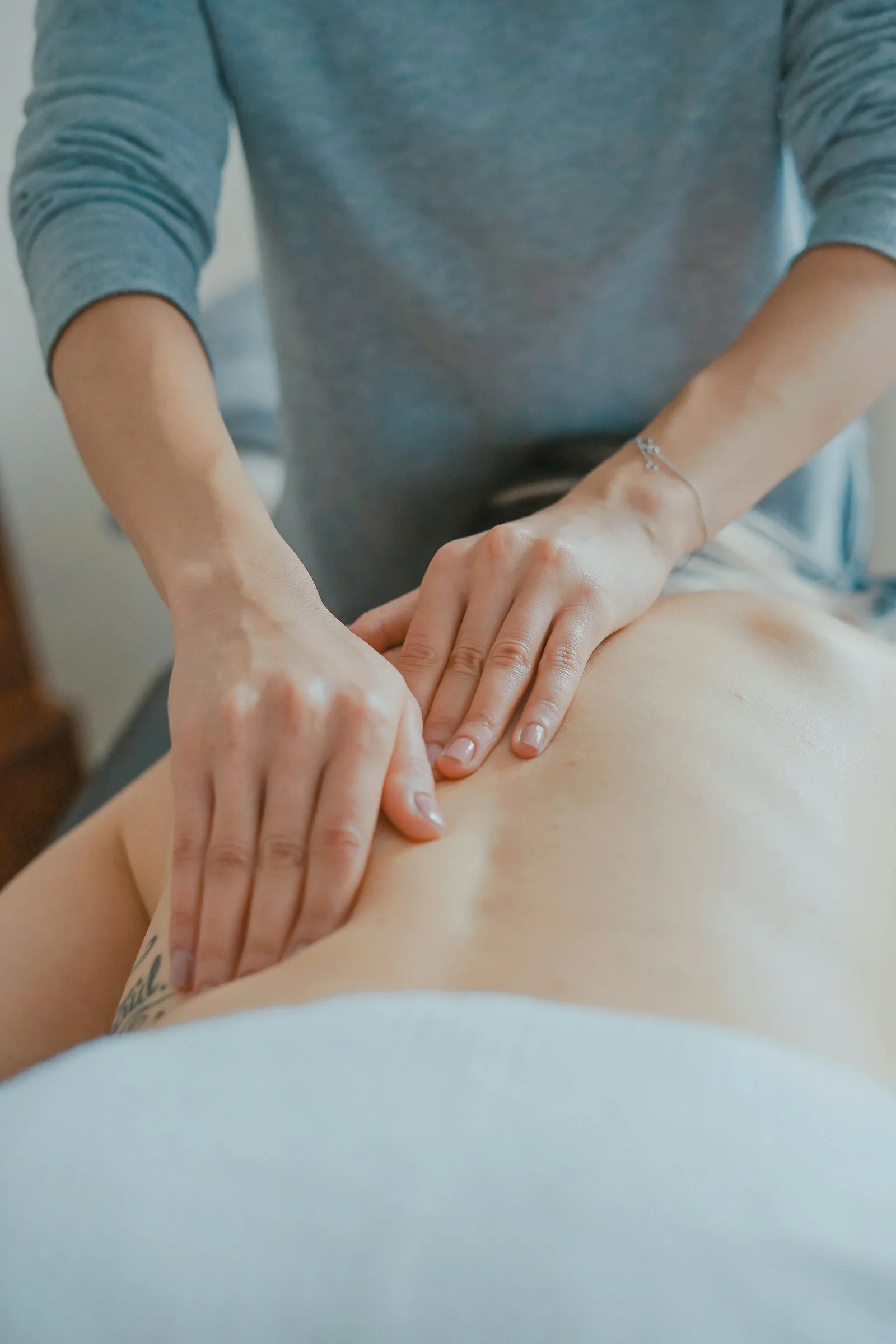
Prenatal massage performed by a trained massage therapist is safe during the second and third trimesters for most pregnancies. The safety depends on having a qualified therapist who understands pregnancy contraindications, avoids inappropriate pressure points and techniques, uses correct side-lying positioning, and screens for high-risk conditions before beginning. Spa New You does not offer massage in the first trimester due to the elevated miscarriage risk during that period regardless of whether massage causes it — this is a conservative clinical position, not a reflection of confirmed risk. If your pregnancy has been designated high-risk by your physician or midwife, get clearance before booking.
You will be positioned on your side — side-lying — supported by bolsters or pillows under the abdomen, behind the back and between the knees. This position takes the weight of the uterus off the inferior vena cava and lumbar spine while giving your therapist access to the back, hips and legs. You typically start on your left side, which improves circulation to the placenta, and rotate to the right side partway through. You will not be positioned face down after the first trimester, and flat-on-your-back positioning is used only briefly and with adjustment based on your comfort and gestational age.
For sciatic pain in pregnancy that has a significant muscular component — particularly involving the piriformis and gluteal muscles — prenatal massage can provide substantial, measurable relief. The effect typically develops over the twenty-four hours following the session rather than immediately. If your sciatic pain is primarily structural — direct pressure from the uterus on the nerve — massage reduces the muscular tension contributing to the pressure but cannot eliminate the structural cause. Most pregnancy-related sciatica has both components. Clients consistently report two to four days of reduced sciatic symptoms after a properly focused prenatal session.
There is no standard upper limit. Many clients have their last prenatal session in week thirty-seven or thirty-eight. Some continue to week thirty-nine if they are managing well and their obstetric provider has no concerns. The session structure adjusts in the final weeks — positioning becomes more specific to accommodate the larger abdomen, and your therapist is more attentive to Braxton Hicks contractions or any signs of labour. If you are past thirty-seven weeks and considering a session, mention it to your therapist and your obstetric provider. The session is not a labour induction tool. Certain acupressure points that are sometimes associated with uterine stimulation are avoided at every prenatal session regardless of gestational age.
Insurance receipts may be available for sessions with eligible therapists. Please confirm receipt availability when booking. Reimbursement depends on your insurer and policy. Please check annual limits, per-session limits and any referral requirements with your insurer before your appointment.
A history of miscarriage does not automatically contraindicate prenatal massage in a subsequent pregnancy that is progressing normally. Disclose your history at the intake. Your therapist will note it, confirm your current pregnancy is being monitored normally by your obstetric provider and proceed conservatively — we do not offer massage in the first trimester regardless, which is when miscarriage risk is highest. If your current pregnancy has been designated high-risk due to your history, get explicit clearance from your physician or midwife before booking. If your care team has said your current pregnancy is proceeding normally, a prenatal massage in the second trimester is generally appropriate.
For uncomplicated vaginal deliveries, prenatal massage transitions to postpartum massage at approximately four to six weeks after the birth. For caesarean births, the incision site needs to be fully healed — generally six to eight weeks — before any work on or near the lower abdomen is appropriate. Your therapist avoids the caesarean scar area until you have been cleared by your physician or midwife for manual therapy near the incision. When you call to book your first postpartum session, mention your delivery type and approximate date so we confirm the right timing and structure for your appointment.
Prenatal massage, also called pregnancy massage, is a manual therapy session specifically structured for the physiological changes of the second and third trimesters of pregnancy. It uses modified positioning — side-lying with bolster support rather than face-down or flat on the back — and adapted techniques that avoid deep tissue pressure, certain acupressure points and areas of elevated DVT risk. The session addresses the specific physical complaints of pregnancy: lower back and sacroiliac pain, swelling in the legs and feet, hip and sciatic pain, upper back and shoulder tension and the general nervous system overload that accumulates through the third trimester. It is performed by trained massage therapists who understand pregnancy physiology and contraindication screening.
Most prenatal massage practices, including Spa New You, begin accepting clients from the second trimester onward — generally week thirteen or fourteen. The first trimester carries elevated miscarriage risk and is not a period when we offer massage regardless of whether massage causes it; the conservative position is to wait. The second trimester is typically when clients begin developing the physical symptoms that prenatal massage addresses most directly — lower back pain, round ligament tension, early swelling — so starting at week fourteen and maintaining a monthly rhythm through the third trimester is the most common and effective approach. Third trimester is when symptoms are at their most significant and sessions tend to have the most immediate impact.
Yes, for a pregnancy that is progressing normally without high-risk designation. The third trimester is actually when prenatal massage tends to be most beneficial because the physical load is at its highest — the uterus is at maximum size, back and hip pain is typically most pronounced, swelling is most persistent and sleep is most disrupted. Your therapist adjusts the session for the third trimester specifically — positioning accommodates a larger abdomen, communication about Braxton Hicks or any unusual sensations is more attentive, and the work around the lower back is done with awareness of the proximity to the uterus. If you have been told by your physician or midwife that your pregnancy is high-risk, get specific clearance before booking.
Several things are fundamentally different. The positioning is different — you are on your side with specific bolster support throughout rather than face down or flat on your back. The techniques are different — deep tissue work, strong pressure on the legs, certain acupressure points and friction techniques on the abdomen are all excluded. The contraindication screening is more thorough and specific. The goals are different — the session is addressing the specific physiological load of pregnancy rather than general stress or tension. A regular massage session adapted on the fly by a therapist without prenatal training is not the same thing as a session planned and executed by someone with specific training in pregnancy massage.
The evidence that massage induces labour in a normal pregnancy is not strong. Certain acupressure points — particularly around the ankles and in the webbing between the thumb and index finger — are traditionally associated with uterine stimulation and are avoided as a precaution during prenatal sessions at every gestational age. The release of oxytocin during massage can cause Braxton Hicks contractions in some clients, which are practice contractions that do not progress to labour. If you experience Braxton Hicks during a session, your therapist adjusts the work and monitors the response. If contractions are sustained, intensifying or accompanied by other labour signs, the session stops and you contact your obstetric provider.
A properly conducted prenatal session should not be painful. The pressure levels used in pregnancy massage are gentle to moderate — the deep tissue component that can cause discomfort in standard massage is not part of the prenatal protocol. The lower back and hip work involves sustained, targeted pressure on specific muscles and may produce a therapeutic intensity — the sensation of productive pressure on a tense muscle — but should not produce pain. If anything during the session produces sharp pain, burning, radiating sensations or significant discomfort, tell your therapist immediately and it stops. Your body's communication about what is and is not appropriate is always the deciding factor.
Yes. When you call to book, let us know your preference and we will confirm availability with a therapist who matches your request. We understand that the positioning and exposure involved in prenatal massage — changing, being in side-lying position with bolster support throughout — is more comfortable for many clients with a same-gender therapist. This is a normal and reasonable request, not an inconvenience.
The standard practice for prenatal massage is to undress to your level of comfort. Your therapist uses draping throughout, repositioning it as the session moves across different areas of the body. Only the area being actively worked is uncovered. Many clients choose to leave underwear on during a prenatal session, which is completely appropriate — your therapist works around it. If there is any clothing or draping preference you have, communicate it at the intake and the session adjusts. Comfort and safety, physical and emotional, are clinical variables in a prenatal session.
No, a physician's note is not required for prenatal massage in Québec in a normal pregnancy. You complete an intake form at the first appointment and your therapist screens for contraindications through that process and through direct questions before beginning the session. If your physician, midwife or CLSC has placed specific restrictions on manual therapy or physical activity due to your pregnancy status, bring that information to your appointment. If you have been told your pregnancy is high-risk for any reason, we recommend getting explicit clearance from your obstetric provider before booking — not because we require a formal note, but because the clinical picture of a high-risk pregnancy needs to be part of the decision.
Call (514) 750-7070. We are open Monday to Sunday, 10:30 AM to 8:30 PM. Tell us your gestational age, your primary symptoms and any history we should know about. We confirm the right therapist, the appropriate session length for your presentation and a time that works. There is no online booking form. A phone call takes less than three minutes and gives you a direct conversation with someone who can answer clinical questions before you arrive rather than an email exchange that takes longer and covers less.
Call (514) 750-7070. Tell us your trimester, what you are dealing with — lower back pain, swelling, sciatica, sleep disruption, general tension, or all of the above — and any relevant history. We confirm whether prenatal massage is the right service for your current presentation, connect you with the right therapist and book a time that fits.
Open seven days a week, 10:30 AM to 8:30 PM. Same flat pricing every day, no weekend surcharge. If you require an insurance receipt, please confirm therapist eligibility and receipt availability when booking. Prenatal and postpartum sessions available in Saint-Henri, easily accessible from NDG, Verdun, LaSalle, Westmount, Côte-des-Neiges and across the island of Montréal.
Same-day appointments require a phone call.
Please call (514) 750-7070 to confirm availability.
Give your body a little extra care this year. Call or book your visit to claim your free hour.