
YOUR NEIGHBOURHOOD MASSAGE STUDIO · MONTRÉAL
Montreal winters are a specific kind of problem for your skin. From late October through April, you are managing cold outdoor air, overheated indoor air and wind that strips moisture faster than your skin can replace it. The result is a combination most Montrealers recognize: tight, flaky, dull skin by February that no amount of moisturizer seems to fix, because the issue is not surface hydration — it is accumulated dead skin, blocked pores and a compromised barrier that has been working against the elements for months. Add the summer transition: humidity, sweat, sunscreen buildup, and the pollution load from downtown construction corridors and traffic on Notre-Dame and Saint-Jacques — and the case for a professional facial is not about luxury. It is about giving your skin a proper reset that home products and drugstore routines cannot fully accomplish on their own.
A professional facial at Spa New You is a deep cleaning and skin treatment session that removes what your daily routine leaves behind. That includes the buildup of dead skin cells in the stratum corneum that dulls texture and blocks products from absorbing properly, the sebum and environmental debris that accumulates in pores over weeks even with consistent cleansing, and the surface irregularities — uneven texture, dry patches, early congestion — that compound if they are not addressed at the tissue level. The session uses professional-grade products, steam, exfoliation, extraction and mask application in a structured sequence that is calibrated for your skin type at the time of the appointment.
At Spa New You on Saint-Jacques Street in Saint-Henri, our facial treatment is performed by trained estheticians working with a systematic approach to skin assessment and treatment. The session is built around your skin's actual condition when you arrive — not a fixed script. Insurance receipts are not issued for esthetic services in the same way as massage therapy, but all services are performed to professional esthetic standards by trained practitioners. Same flat rates every day, no weekend surcharge.
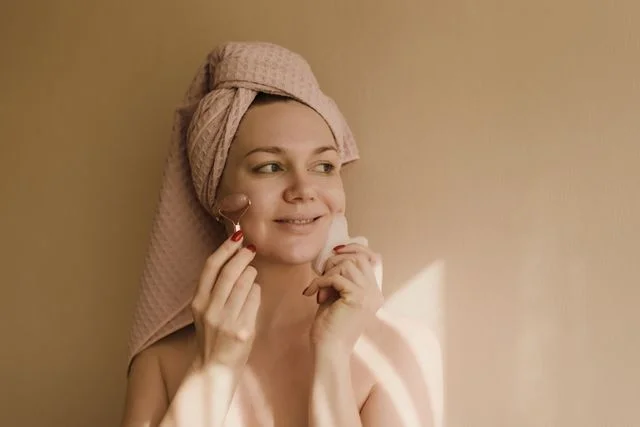
The most frequent question clients ask before their first facial is whether it is just an expensive version of what they do at home. The answer is no, and the reason is not the products — it is the process and the tools. A home skincare routine maintains the skin between professional treatments. It does not penetrate the same way, cannot safely perform extractions, and does not have access to professional-grade steam, exfoliation concentrations or treatment masks. What a professional facial addresses is the layer of congestion and buildup that accumulates beneath the surface of daily cleansing — the sebaceous filaments that expand into visible blackheads, the dead skin that does not shed efficiently in Montreal’s humidity fluctuations, the clogged pores that dehydration and over-production of sebum fill over weeks and months.
The exfoliation component of a professional facial removes dead skin cells from the stratum corneum — the outermost layer — at a depth that gentle home exfoliants do not reach consistently. This matters for several reasons beyond immediate texture improvement. Dead skin cell buildup is the primary reason moisturizers sit on the surface rather than absorbing. It is why makeup applies unevenly. It is why skin looks dull in photographs even when you have been consistent with your skincare. Removing that layer properly exposes the newer, smoother skin underneath and resets the surface for both treatment products and your home routine to work more effectively afterward.
Steam is not decorative. Applied before extraction and treatment, steam softens the follicle openings and allows sebum plugs and congestion to be cleared without force. Extraction performed without proper preparation causes more damage than it resolves — trauma to the skin, inflammation, and increased visibility of the pores you were trying to clear. Professional extraction done correctly after adequate steam time removes congestion cleanly and minimizes the trauma response. For clients managing active or chronic congestion in the T-zone, around the nose or on the chin — all areas that are proportionally more common in people living in high-pollution urban environments or dealing with the sebum overproduction that often accompanies stress — proper extraction is the part of a professional facial that home routines simply cannot replicate.
The mask and serum application phase of the session delivers concentrated active ingredients to freshly cleaned, open skin. This is when the investment in extraction and exfoliation pays off: a hydrating or clarifying mask applied after the surface has been properly prepared absorbs and works at a different level than the same product on uncleaned skin. The treatment is completed with appropriate moisturizer and sun protection guidance for your skin type. What leaves the session is not just cleaner skin — it is skin that has been reset to a better functional baseline, with open pores, removed congestion, improved circulation from the massage component of the treatment, and a smooth surface that responds better to whatever products come next.
A facial is not a medical procedure and does not treat clinical skin conditions. Acne vulgaris, rosacea, eczema, psoriasis, post-inflammatory hyperpigmentation from deep scarring, and similar dermatological diagnoses fall outside what a professional esthetic facial addresses. A facial can support skin in managing some surface-level aspects of these conditions — reducing congestion that triggers acne flares, calming surface sensitivity, improving hydration — but it is not a substitute for dermatological treatment when a clinical condition is present and actively managed. If you are on prescription skincare including retinoids, isotretinoin (Accutane or generics), or topical acids prescribed by a dermatologist, disclose this before your appointment. Several common prescription skincare agents thin and sensitize the skin in ways that require modified protocols or a waiting period before certain facial techniques are applied safely.
One session is not a transformation. A professional deep-cleansing facial addresses the current state of your skin at the time of the appointment. The improvement is immediate and real — better texture, cleaner pores, improved radiance — but maintaining those results requires consistent sessions because the same processes that create buildup, congestion and surface irregularity continue between treatments. The clients who see the most sustained improvement from professional facials are those who come regularly — typically every four to six weeks — rather than booking one session expecting a permanent change and then returning only when the skin has returned to its pre-treatment state.

These are the five presentations we see most often at Spa New You. If yours matches one of them, the session is designed for you.
This is the most common presentation we see from January through April. The cause is not that your home routine is wrong — it is that Montreal winters create a level of transepidermal water loss and dead skin accumulation that outpaces what daily cleansing and moisturizing can manage on their own. Cold outdoor air has almost no humidity. Indoor heating further drops relative humidity. Wind physically strips the surface. The result is a skin barrier that is working at diminished capacity, a surface layer of dead skin that is not shedding efficiently, and products that are hitting that surface layer rather than the skin underneath. Moisturizer feels like it evaporates within an hour. Foundation looks flaky by midday. Nothing feels right.
A professional deep-cleansing facial cuts through that accumulated layer directly. The exfoliation removes the dead skin that is blocking everything else from working. Steam and treatment mask rehydrate the skin beneath it. Clients who come in February or March for this specific reason leave with visibly improved texture and skin that absorbs their home products properly again for several weeks after the session. One session mid-winter plus one session at the seasonal transition in late April handles most of the winter damage cycle. Year-round monthly sessions prevent it from accumulating to this level in the first place.

Blackheads are oxidized sebum and debris in a follicle opening that has become stretched by repeated congestion. Squeezing them at home without preparation causes trauma that triggers more sebum production and inflammation — the exact opposite of what you are trying to accomplish. The correct approach is softening the follicle first with steam, extracting with properly sized tools and technique, and then applying a mask that helps regulate sebum production and tighten the appearance of pores after they have been cleared. This is a sequence, not just extraction. Without the preparation and follow-through, extraction causes more visible congestion over the following days.
The clients who manage persistent blackheads most effectively with professional facials are those who maintain a four-to-six-week schedule. At that interval, congestion is cleared before it becomes established, the post-extraction inflammation cycle has time to complete, and the skin's sebum regulation responds to consistent treatment. The clients who see the least improvement are those who come once every six months when the congestion has been building for weeks and the pores are visibly enlarged, try to squeeze at home between sessions, and expect one treatment to produce lasting results. The approach matters as much as the treatment.

Adult acne behaves differently than teenage acne and responds poorly to treatments designed for the high-sebum presentations of adolescence. Adult acne in Montréal clients is frequently triggered by the combination of stress, hormonal fluctuations, product buildup on skin that is simultaneously producing excess sebum in some zones and being dehydrated by climate in others, and the habit of applying more and heavier products to compensate for dryness — which then blocks pores and triggers more breakouts. The harsh acne-fighting products that worked at seventeen dry out adult skin, disrupt the barrier, and often make the congestion cycle worse rather than better.
A professional facial assesses your current skin condition and works with it. The esthetician looks at where you are breaking out — chin and jaw line (hormonal pattern), T-zone (sebum production pattern), cheeks and temples (often product or friction related) — and how the skin around the breakouts is behaving. The treatment focuses on clearing existing congestion without aggravating the barrier, calming inflammation in active areas, and rehydrating the skin so the sebum overproduction that accompanies dehydration reduces. The product guidance after the session often includes a simplification of the home routine — removing the products that are contributing to the cycle rather than adding new ones.

Uneven skin tone that presents as dullness, flat texture and a tired appearance even on days with adequate sleep is almost always a surface accumulation issue rather than a hydration problem. The skin looks grey or flat because the light that would normally reflect off a smooth skin surface is instead scattering off the irregular dead skin layer. Products applied to this surface do not produce the brightness effect they advertise because they are not reaching the skin they were formulated for. This presentation is very common among Montrealers in the 25-to-45 age range who are consistent with their skincare routine but still are not seeing the results the products promise.
Professional exfoliation followed by a brightening or hydrating mask is the most direct intervention for this presentation. The change from before to after a single session is typically visible in natural light immediately after the treatment. The longer-term fix is regular sessions that prevent the buildup from reaching the point where it significantly dulls the appearance. Clients who have never had a professional facial and have been consistent with home skincare for years often experience the first session as a significant improvement — not because what they were doing was wrong, but because professional exfoliation handles the layer that home products cannot.

Most of our new facial clients have never had a professional facial or had one experience years ago at a different spa that felt either too harsh or too superficial. Not knowing what a professional facial actually involves — what happens, whether extractions hurt, whether your skin will be red afterward, how long the results last — is a legitimate reason not to book one. We would rather explain it clearly before you arrive than have you show up uncertain about what you have signed up for.
Here is what to expect: the session starts with a thorough skin assessment and cleanse. Steam is applied for several minutes to prepare the skin for extraction. Exfoliation is performed — your esthetician selects the appropriate type and intensity for your skin type. Extractions are performed on areas with visible congestion — the pressure is firm and brief, not particularly painful for most people, and nothing is forced. A treatment mask is applied and sits while you rest. The session ends with moisturizer and product guidance. Your skin will be slightly pink after the session and will look and feel cleaner and smoother within twenty-four hours. Plan nothing high-stakes for the evening after your first facial — give the skin time to settle.
Every facial at Spa New You follows a specific sequence at each appointment. Here is exactly what happens at each visit so you know what to expect before you arrive.
Before your session begins, your esthetician does the following:
The intake process is not administrative. A session calibrated for your skin type and current condition produces better results than a fixed protocol applied to everyone. The ten minutes before the treatment begins are part of the treatment.
The session begins with a thorough double cleanse to remove makeup, sunscreen, surface sebum and environmental debris. Your esthetician uses products appropriate for your skin type — not a generic cleanser applied uniformly. The cleanse is thorough because exfoliation and extraction performed over incompletely cleaned skin do not work as effectively and carry a higher risk of pushing surface bacteria into open follicles during extraction. The cleanse takes longer than it sounds like it should. This is intentional.
Steam is applied for several minutes after cleansing. The steam softens the follicle openings, increases circulation to the surface and prepares the skin for exfoliation and extraction. The level of warmth from the steam is comfortable for most people — warm, not hot, and controlled. If the temperature feels too intense at any point, say so and it adjusts immediately. Clients with sensitive skin or visible redness have the steam modified or applied from greater distance. Steam is not skipped because it looks optional — it is the preparation that makes extraction safe and effective.
Exfoliation follows steam. Your esthetician selects the method based on the assessment — a physical exfoliant for certain skin types, an enzymatic treatment for sensitive skin that cannot tolerate abrasion, or a combined approach. The exfoliation focuses on texture and congestion areas identified in the assessment rather than a uniform pass over the full face. Pressure and intensity are communicated during the process. If anything feels sharp, burning or too abrasive, say so immediately. The goal is productive removal of the dead skin layer, not discomfort.
Extraction is performed in areas where congestion is present and the preparation has made extraction safe and effective. The esthetician uses appropriate tools and technique — controlled, brief pressure, working systematically through congested zones rather than forcing any individual pore. Extractions should not be severely painful. Some sensitivity is normal, particularly around the nose and chin. If an area is too sensitive or inflamed for extraction today, the esthetician will note it and address it in a subsequent session after the skin has had time to respond to the exfoliation and mask treatment.
The treatment mask is applied based on your skin type and the work done in the session. If extraction was significant, a calming mask reduces the post-extraction flush. If the primary concern is dehydration or dullness, a hydrating mask delivers concentrated actives to the freshly exfoliated skin. If the goal is pore refinement after clearing congestion, a clarifying or clay mask is appropriate. The mask sits for several minutes while you rest. Facial massage or décolleté work may be incorporated during this phase depending on session length and what was planned in the intake. The session closes with appropriate moisturizer, SPF guidance for the following day, and any product or routine recommendations.
Most clients leave looking visibly cleaner and brighter. The texture improvement from professional exfoliation is usually noticeable immediately. Some redness — particularly in areas where extraction was performed — is normal and typically resolves within two to four hours. Your skin may feel more sensitive than usual for the remainder of the day, which is expected after the mechanical and chemical processes of the session. Plan a low-key evening. Avoid heavy workouts that increase sweating, hot environments like saunas, and activities that involve touching your face repeatedly.
The immediate post-facial effect softens over the following days as the skin returns toward its baseline. This is normal and not a sign that the session did not work — it is simply the skin returning to its regular production and accumulation cycle. The baseline it returns to, however, is often slightly better than before the session, particularly for clients who have had several consecutive monthly appointments. Each session moves the baseline in a direction of better pore function, reduced congestion accumulation and improved surface quality over time.
The post-session flush has typically resolved and the skin looks its best at this point. Texture is smoother, pores appear cleaner, and the brightness from removed dead skin is at its peak. Product absorption from your regular home routine is noticeably improved because the surface layer that was blocking it has been removed. This is a useful reference point for how your skin responds to your current products when they can actually reach the skin — if your moisturizer feels more effective than usual, it is likely because it is working as intended on properly prepared skin. Maintain that effect by continuing your routine without adding anything new in the first week.
A mild breakout in the forty-eight to seventy-two hours following a professional facial is not uncommon, particularly for clients with congestion-prone skin having their first or second professional treatment. The extraction and exfoliation process moves congestion to the surface, and some of what was forming beneath the surface of the skin emerges more quickly. This is generally a sign of effective extraction rather than a problem with the treatment. The breakout is typically smaller and resolves more quickly than standard acne. If breakouts after a facial are significant, persistent beyond a week, or accompanied by unusual sensitivity or swelling, contact the spa to discuss your skin's response before booking the next session. Your esthetician adjusts the protocol for the following visit based on how your skin responded.
Skin cell turnover happens on a roughly four-week cycle in healthy adult skin, slowing with age. Professional facial timing is built around this cycle. Here is the honest framework, not the upsell version.
One professional facial every four to six weeks is the most effective schedule for most adults in Montreal managing normal skin concerns. At this interval, exfoliation addresses the dead skin accumulated over the previous turnover cycle before it significantly dulls texture or blocks products. Congestion is cleared before it becomes established enough to cause visible blackheads or inflammatory acne. Seasonal shifts — the Montreal transition from winter to spring and summer to fall — are handled before the skin deteriorates significantly rather than after. Clients who maintain monthly sessions consistently report that their skin is markedly easier to manage with home products than when they were going months between professional treatments, because the accumulation cycle never gets far enough to require intensive correction.
For clients with persistent active congestion, established blackheads or a history of clogged pores that have not been professionally treated in a long time, a schedule of every two weeks for the first six to eight weeks clears the backlog more efficiently than monthly sessions. The first session addresses the surface. The second session two weeks later reaches the congestion that had been forming beneath the surface during the first session's treatment. By the third or fourth session, the skin is usually in a better state for transitioning to monthly maintenance. This approach is more intensive in the short term but produces a cleaner baseline to maintain. Your esthetician can tell you after the first session whether your presentation would benefit from this approach or whether monthly sessions are sufficient.
If budget or schedule makes monthly sessions difficult, two to four sessions per year timed to the Montreal seasonal transitions give the most value. The most effective timing is late April or early May after the winter damage has accumulated and the skin is transitioning to warmer months, and October before the dry heat of indoor heating season starts compounding the problem. A third session in February or March addresses mid-winter accumulation, and a fourth in August if summer sweat and sunscreen buildup is significant. At this frequency, you are not preventing accumulation — you are addressing it seasonally before it becomes severe. Results from each session are meaningful but do not carry through as long as they do with monthly sessions.
Your esthetician gives you a specific recommendation after the first session based on your skin type, current congestion level, and what they observed during the treatment. There is no package purchase requirement. The recommendation is based on your skin and your realistic schedule, not on selling more sessions.
Spa New You is at 3259 Saint-Jacques Street in Saint-Henri, accessible from across the Sud-Ouest borough and the western end of the island. Here is how long it takes to get here from the neighbourhoods we serve most often.
By metro, take the orange or green line to Lionel-Groulx station — the only interchange point of both lines at the west end — then bus 36 on Saint-Jacques Street heading west. The spa is three stops from Lionel-Groulx, about eight minutes of travel time. Walk from the stop to our door takes under two minutes.
Street parking is available on Saint-Jacques and the surrounding streets of Saint-Henri throughout the day. The block near the spa sees regular turnover during business hours. On-street parking on Saint-Jacques applies meter rates on weekdays. Residential streets nearby are generally unrestricted on Sundays.
Spa New You is in the same neighbourhood as Marché Atwater, the Canal de Lachine cycling path and park, and the Parc Marguerite-Bourgeoys. Clients come for facials from across the island — from Plateau-Mont-Royal (H2J, H2W), Mile-End (H2T), Rosemont (H1X, H2G), and communities closer to the Sud-Ouest borough. The location is also convenient for clients who work near the McGill University Health Centre (MUHC) complex near Atwater, in the Saint-Henri and Little Burgundy business corridor, and in the Westmount business district — people who spend their working days in environments with forced-air climate control that directly contributes to the skin dryness and dehydration that professional facials address most directly.
H4C (Saint-Henri), H4E (Côte-Saint-Paul), H4A (NDG west), H4B (NDG east), H4G (Verdun north), H4H (Verdun south), H8P (LaSalle north), H8R (LaSalle central), H3Y (Westmount south), H3Z (Westmount north), H3X (Côte-des-Neiges south), H3W (Côte-des-Neiges north), H3B (downtown west), H3G (downtown central), H3H (Shaughnessy Village), H2X (Chinatown / Milton-Parc), H2T (Mile-End south), H2J (Plateau-Mont-Royal), H2W (Plateau central), H1X (Rosemont)
The 60-minute deep-cleansing facial is the complete session — it includes the full sequence of double cleanse, steam, exfoliation, extraction, treatment mask and moisturizer with post-treatment product guidance. This is not a shortened or introductory version of a longer service. Sixty minutes allows the esthetician to work through the complete protocol without rushing any phase, which is the difference between a session that produces lasting improvement and one that moves through the steps too quickly to allow any of them to do their job.
Spa New You also offers massage therapy services in the same location, with sessions from 30 to 120 minutes at fixed rates. Clients who book both a facial and a massage at the same appointment can schedule them back to back. Call ahead to confirm scheduling and whether the combination is available on your preferred date.
The Regular Cleaning facial at $85 is straightforward value for a professional session in a Montréal spa context. Many spas in NDG, Westmount and downtown charge considerably more for comparable deep-cleansing services and add fees for extractions as a separate line item. At Spa New You, the session price includes the full protocol — there are no add-on charges for extraction or extended steam. The same rate applies Monday through Sunday, so booking on a weekend does not cost more than the same service on a Tuesday.
Every facial at Spa New You is performed by a trained esthetician. Professional esthetic practice in Québec involves formal training in skin physiology, skin care techniques, product knowledge, and contraindication screening — the foundation of a correctly performed professional facial. Your esthetician assesses your skin before the session, selects products and techniques appropriate for your skin type and current condition, and adapts the treatment based on how your skin responds during the session.
Our facial estheticians:
When you call to book, ask which esthetician is available for facial services. If you have a specific skin concern — persistent adult acne, sensitive or reactive skin, significant congestion, first-time facial — mention it on the call and we will confirm the best match for your appointment.
Editor note: These are representative composite cases based on typical presentations. No individual is identified.
A client from Notre-Dame-de-Grâce (H4A) in her mid-thirties arrived in late February having used the same moisturizer-heavy routine since October without significant improvement in her skin's texture or brightness. She was consistent — cleansing morning and evening, applying a rich moisturizer, using a serum she had researched carefully. The skin still looked dull and felt tight by midday. Foundation was separating by early afternoon. She had never had a professional facial and was not sure whether the issue was her products or something the products could not fix.
The intake assessment identified the issue immediately: significant dead skin accumulation that had built up over the winter months and was sitting on top of the skin surface, blocking every product from absorbing properly. The skin beneath it was actually reasonably healthy — the problem was entirely at the surface level. The session focused on thorough exfoliation followed by a hydrating mask with concentrated hyaluronic acid and ceramide ingredients applied to the freshly cleared surface. Extraction was minimal — the congestion was primarily surface-level accumulation rather than deep pore blockages.
She described the result as surprising, because she had not expected the change to be visible from across the room. The dullness was gone. Texture was visibly smoother. In the following week, she reported that her regular moisturizer absorbed noticeably better and her foundation applied and stayed in place for the first time in months. The esthetician's recommendation was monthly sessions through the rest of the winter and into the spring transition to prevent the level of accumulation she had been managing from returning.
This case is the most common presentation during Montreal winters. The pattern — consistent skincare routine, expensive products, no improvement — almost always traces back to dead skin accumulation that prevents anything from working as intended. One professional exfoliation session resets the surface. The products work the way the instructions say they should because they can finally reach the skin they were formulated for.
A client from Verdun (H4H) in her early thirties had been managing chin and jawline breakouts consistently for several years. She had tried the standard over-the-counter acne products — salicylic acid cleansers, benzoyl peroxide spot treatments, niacinamide serums — without significant change. The breakouts were not severe but were persistent, cyclical in timing, and concentrated in the chin and jaw area. She had started avoiding social situations where her skin was visible under certain lighting, which she described as frustrating given how much time and money she had spent trying to fix it.
The intake assessment at Spa New You identified a skin type that was simultaneously producing excess sebum in the T-zone and chin area and being dehydrated by the combination of harsh acne products and Montreal's winter air. The barrier was compromised. The skin was triggering more oil production to compensate for the dehydration — a feedback loop where the products intended to control oiliness were actively worsening the underlying cause. The esthetician recommended stopping three of the five products in her routine before the session, which was significant news to a client who had spent months adding products trying to solve the problem.
The session focused on calming the barrier rather than aggressively treating the acne. Gentle exfoliation rather than the more intensive approach used for straightforward congestion. Minimal extraction — only on areas that were fully ready and would not be traumatized by the process. A calming, barrier-supportive mask rather than a clay or clarifying mask. Post-session guidance included a simplified home routine — a gentle cleanser, a niacinamide-based moisturizer, and SPF. Nothing with active acids or benzoyl peroxide for at least three weeks.
At her second appointment four weeks later, the chin and jawline congestion had reduced significantly and the inflammatory cycle had calmed. She had not had a significant breakout in the three weeks following the first session. The skin texture was still uneven but was improving. By the third monthly session, the breakout cycle had broken. The persistent acne she had been managing for years turned out to be primarily driven by a disrupted barrier and an over-complicated routine — both of which a professional facial assessment identified immediately.
A client from the Plateau-Mont-Royal (H2J) in his late twenties had avoided professional facials for two reasons: he was not sure they did anything that a good home routine did not already accomplish, and the spa environment felt like it was designed for a different demographic. He booked at Spa New You on a recommendation from a colleague who had been coming for massage therapy, more out of curiosity than conviction. His skin concern was persistent blackheads on and around the nose that had been present since his late teens and which no product in his routine had visibly improved.
The intake confirmed what he had suspected from home attempts: the blackheads were established, the follicles were stretched, and squeezing at home had not made them worse but had also not improved them. The esthetician was direct about what the session could accomplish — professional extraction on properly prepared skin would clear what was there, but maintaining the results required regular sessions because his skin type produced enough sebum to refill those follicles within four to six weeks. One session would give him a meaningful before-and-after. Ongoing results required an ongoing schedule.
The session was more procedural than relaxing — he described it that way approvingly. Steam was applied longer than expected. Extraction was thorough and focused on the nose and surrounding area. The esthetician explained what she was doing and why at each step, which he found useful. He left with visibly cleaner pores in the nose area and a texture improvement he had not expected. He booked a second session before leaving the spa — not because of any sales pressure, but because what he had been trying to accomplish for years had happened in a single professional session.
This is the pattern we see consistently with first-time facial clients who come in skeptical. The improvement from professional exfoliation and extraction is immediate and visible in a way that home products typically do not produce. The skepticism about whether it is worth the cost usually resolves after the first session, because the results of a professional treatment answer the question more clearly than any explanation can.
The core difference is the sequence and the depth of each step. Home cleansing removes surface oils and makeup but does not penetrate the follicle the way professional cleansing followed by steam does. Home exfoliants are formulated for regular use without sensitivity, which means they are less intensive than professional exfoliation. Extraction — removing blackheads and congestion from pores — is only safe and effective when performed correctly after steam preparation with proper tools; home attempts without preparation cause inflammation and can worsen congestion. Treatment masks applied to freshly exfoliated skin after extraction work at a level that the same products applied to uncleaned skin at home do not. The professional session does not replace a home routine. It resets the skin's baseline so that home routine can work as intended.
Most of the session is comfortable. Exfoliation may produce some sensation depending on your skin's sensitivity — your esthetician adjusts the intensity based on your response. Extraction is the part clients ask about most. On properly steamed skin, extraction involves brief, controlled pressure. Some sensitivity is normal particularly around the nose and chin, which tend to have denser congestion. It should not be severely painful. If an area is too sensitive for extraction today — active inflammation, thinned skin from recent products — your esthetician notes it and addresses it in a subsequent session. You are not expected to tolerate discomfort. Say so and the approach changes immediately.
Sensitive and reactive skin types benefit from professional facials when the session is calibrated for sensitivity — and this is exactly why the intake assessment matters. Sensitive skin requires gentler exfoliation methods, no aggressive extraction on inflamed areas, and a calming mask rather than a clay or clarifying mask. Many clients who describe their skin as too sensitive for a facial are actually good candidates for a modified protocol that specifically addresses the sensitivity. Disclose all sensitivity triggers, current medications, recent reactions, and rosacea or eczema diagnoses at the intake. Your esthetician builds the session around what your skin can safely handle, not a standard protocol.
For texture and brightness from exfoliation: typically two to three weeks before the accumulation cycle returns the skin to its pre-treatment state, though clients who maintain regular sessions find their baseline improves over time. For extraction results: four to six weeks before the cleared pores have refilled to their pre-treatment congestion level in most skin types. The improvement does not disappear overnight — it gradually reverts as the skin continues its normal production and accumulation cycle. Monthly sessions interrupt this cycle before it reaches the level requiring significant correction rather than maintenance.
A mild, brief breakout in the forty-eight to seventy-two hours after a professional facial is not uncommon for clients with congestion-prone skin, particularly after their first or second professional treatment. Exfoliation and extraction bring congestion to the surface and accelerate the emergence of what was forming below it. The breakouts that appear after a facial are typically smaller, resolve faster, and occur because the treatment accelerated a timeline that would have happened anyway. If the post-facial breakout is significant, covers areas that were not congested before the session, or persists beyond a week, contact the spa before booking the next session. The protocol is adjusted based on how your skin responds.
Avoid anything that sensitizes or thins the skin in the week before your appointment: no new active skincare products, no at-home chemical peels, no aggressive physical scrubbing. Continue your regular routine. Do not get a facial immediately before a significant event — a wedding, a formal event, a photoshoot — because even a well-executed session may produce some redness that takes twenty-four hours to settle. Give yourself at least three days between the session and any occasion where you want the skin looking its absolute best. Come with clean skin if possible; if you are coming directly from work with makeup on, we cleanse thoroughly at the start of the session.
Prescription retinoids — tretinoin, tazarotene, adapalene in prescription strength — thin and sensitize the skin. The standard recommendation is to stop using a retinoid for at least seven to ten days before a facial and to disclose retinoid use at the intake. Your esthetician modifies the protocol — typically avoiding intensive exfoliation and focusing on hydration and calming treatment instead. Isotretinoin (Accutane or generic equivalents) is a more significant contraindication: clients currently taking oral isotretinoin should not receive facial exfoliation or aggressive extraction. The skin's sebum production is pharmaceutically suppressed, the skin is extremely thin and fragile, and healing is impaired. Wait at least six months after completing an isotretinoin course before professional exfoliation. Disclose any current or recently completed prescription skincare medications at the intake without exception.
A deep-cleansing facial is a professional skin treatment that addresses the layer of congestion, dead skin and sebum buildup that accumulates in the pores and on the skin surface between home cleansing sessions. The session follows a structured sequence: thorough double cleanse, steam application to soften follicle openings, professional exfoliation, extraction of sebum plugs and blackheads, treatment mask appropriate for your skin type, and moisturizer with post-treatment guidance. The term "deep cleansing" refers to the penetration of the cleaning process beyond what daily home cleansing achieves — specifically the follicle-level clearing that steam and professional extraction accomplish. At Spa New You, the Regular Cleaning facial is a 60-minute professional deep-cleansing session at $85.
Every four to six weeks is the standard recommendation, timed to the roughly four-week skin cell turnover cycle. At this frequency, dead skin and congestion are addressed before they significantly impact skin quality rather than after they have accumulated over months. Montréal's climate makes this schedule particularly relevant — the combination of winter dryness and summer humidity creates two distinct accumulation patterns per year, and the seasonal transitions are high-value times to book if you are doing fewer than monthly sessions. If your schedule or budget allows for only two to four sessions per year, timing them to late April and October captures the transitions when the skin has most recently needed the reset.
Yes, and this is the question most first-time facial clients arrive with. A good home skincare routine and professional facials serve different functions. Your home routine maintains the skin between sessions and delivers ingredients daily. A professional facial does the things your home routine cannot — professional-depth exfoliation, steam-prepared extraction, concentrated treatment mask on freshly cleared skin, and a trained esthetician's assessment of your skin's current condition. The most common outcome for clients with established home routines who add regular professional facials is that their existing products start working better, because the surface accumulation that was preventing absorption has been removed. The facial does not replace the home routine. It makes the home routine more effective.
"Regular cleaning" or "deep cleansing" describes the session's primary focus — thorough skin cleaning, exfoliation and extraction rather than a specific treatment focus like brightening, anti-aging or medical-grade chemical peeling. It is the foundational professional facial that addresses congestion, dead skin, and surface quality. It is the appropriate starting point for most clients and the session that delivers the most universally relevant result — clean, smoothed, properly prepared skin. Specialized facials — hydrafacials, chemical peel treatments, medical-grade facials — are different services requiring different equipment or medical oversight. The Regular Cleaning facial at Spa New You is a complete professional deep-cleansing treatment, not a basic entry-level service.
If you can, yes — arriving with clean skin saves time at the start of the session and means your esthetician can assess your skin before any cleansing products alter its appearance. If you are coming directly from work, an event or anywhere that makes arriving without makeup impractical, that is completely fine. The session begins with a thorough double cleanse that removes makeup, sunscreen and surface products before the assessment and treatment sequence begins. Coming with makeup on does not compromise the session. It just means the cleansing phase takes slightly longer.
A professional facial is one of the most effective interventions for oily and congestion-prone skin, not a contraindication. The combination of professional exfoliation, steam and extraction directly addresses the two main mechanisms of oily skin concerns — the dead skin accumulation that traps sebum in pores and the sebum buildup itself. A correctly selected treatment mask after extraction can help regulate sebum production and temporarily tighten pore appearance. What makes oily skin worse — heavy moisturizers applied over congested skin, harsh products that strip the barrier and trigger compensatory oil production, home squeezing that inflames follicles — is the opposite of what a correctly performed professional facial does. Monthly facials are particularly valuable for oily skin types because the accumulation cycle moves faster.
Pore size is primarily genetic. Professional extraction and exfoliation clean pores and reduce their visible appearance by removing the congestion that was making them appear larger — a clean, empty pore is less visible than a full one. After the session, properly extracted and treatment-masked pores often appear visibly smaller for one to two weeks. This effect diminishes as the follicle refills. The ongoing approach for clients who want consistently reduced pore visibility is regular professional cleaning that prevents the follicle from staying filled long enough to stretch. Managing oiliness with appropriate home products between sessions extends the time before refilling.
Yes. Spa New You offers both facial and massage therapy services. If you want to book both in the same visit, call ahead to confirm scheduling availability on your preferred date and time. Combining a facial and a massage in a single appointment is a practical option for clients who want to address both skin care and muscular tension without making two separate trips. The scheduling depends on therapist availability for both services on the same day.
Three distinct patterns appear consistently in Montreal clients. Winter dryness — October through April — causes transepidermal water loss, dead skin accumulation, compromised barrier function, and a buildup layer that blocks product absorption and dulls skin appearance. This pattern peaks in February and March and is the most common reason clients book their first professional facial. Summer humidity and sweat — particularly June through August — creates a different pattern: sebum overproduction, increased follicular congestion, sunscreen and sweat buildup in pores, and higher rates of breakouts in congestion-prone skin. Urban environmental load — pollution from construction corridors, vehicle traffic on Notre-Dame and Saint-Jacques, and airborne particles that settle on the skin surface throughout the year — adds to the congestion burden on skin that is already managing seasonal stressors. Professional deep-cleansing facials address all three patterns but the timing and session focus shift depending on which pattern is currently active.
Call (514) 750-7070. We are open Monday to Sunday from 10:30 AM to 8:30 PM. Tell us your main skin concern — congestion, winter damage, first facial, sensitive skin, adult acne — and any relevant information about prescription skincare or recent skin procedures. We confirm the appointment and which esthetician is available for facial services. There is no online booking form. A phone call takes two to three minutes and gives you a direct conversation about whether this session is the right fit for what your skin needs right now.
Call (514) 750-7070. Tell us your main skin concern — winter damage, congestion, adult acne, first facial, sensitive skin — and anything relevant about current prescription skincare. We confirm whether the session is the right fit for your skin right now, answer any clinical questions before you arrive, and book the appointment.
Open seven days a week, 10:30 AM to 8:30 PM. Same flat rates every day, no weekend surcharge. Professional deep-cleansing facials in Saint-Henri, accessible from NDG, Verdun, LaSalle, Westmount, Côte-des-Neiges, and anywhere on the island of Montréal.
Same-day appointments require a phone call.
Please call (514) 750-7070 to confirm availability.
Give your body a little extra care this year. Call or book your visit to claim your free hour.