YOUR NEIGHBOURHOOD MASSAGE STUDIO · MONTRÉAL
YOUR NEIGHBOURHOOD MASSAGE STUDIO · MONTRÉAL
Deep tissue massage is the most frequently misunderstood service in massage therapy. Most people who request it are asking for one of two things: they want more pressure than they got last time, or they have a specific chronic problem they've been told deep tissue can fix. Both are reasonable starting points, but neither captures what deep tissue massage actually is, which means many clients either don't get the treatment that would help them most or they get a session that's too aggressive for what their tissue actually needs. Deep tissue massage is not Swedish massage applied harder. It is a distinct clinical approach that uses different techniques, different depths of work, and a different purpose. The techniques involved — slow compressions and stripping strokes applied at depth through specific muscle groups, cross-fiber friction targeting adhesions, sustained pressure into trigger points, and myofascial release work that engages the connective tissue wrapping the muscle rather than the muscle fiber itself — require specific training, careful palpation and a therapeutic conversation throughout the session that Swedish massage does not. The defining characteristic of deep tissue massage is not the amount of pressure applied. It is the specificity of what is being targeted and why.
The population in Montréal that benefits from deep tissue massage is large and specific. It includes anyone who has accumulated chronic muscle adhesions — dense, fibrous changes in the muscle tissue that form over months and years of overuse, repetitive strain, injury, sustained postural stress or insufficient recovery — and found that Swedish massage, stretching or exercise alone has not changed the underlying quality of the tissue. It includes people who've been told they have tight IT bands, trigger points in the shoulders and neck, chronic low back pain with no structural diagnosis, or persistent muscle holding patterns that return to the same quality regardless of how often they're treated at surface level. Montréal's specific combination of long winters, desk and telework demographics, active commuting populations, cyclists on the canal de Lachine path and residents navigating high-traffic corridors like Notre-Dame and Saint-Jacques adds chronic stress loading to the picture in ways that make deep tissue work particularly relevant here.
At Spa New You on rue Saint-Jacques in Saint-Henri, deep tissue massage is performed by our massage therapists. Sessions are structured around the clinical presentation you bring to the appointment — not a fixed protocol applied to every client regardless of what their tissue actually shows. Insurance receipts for reimbursement are available from FQM-member therapists. Fixed rates apply seven days a week with no weekend surcharge.

The mechanism of deep tissue massage begins with understanding what it is targeting. When muscle is chronically overloaded, injured or held in a shortened position over time, the tissue undergoes structural change. Adhesions form — localized areas where the normally sliding layers of muscle fiber, fascia and surrounding connective tissue become restricted or bound together. These adhesions reduce the muscle’s ability to lengthen and contract through its full range, create areas of reduced circulation and metabolite clearance, and generate referred pain patterns into adjacent structures. Scar tissue from previous injuries — whether formally diagnosed or accumulated from the kind of minor repetitive strain that people don’t necessarily identify as injury — behaves the same way. Deep tissue massage targets these structural changes directly, using specific techniques designed to mobilize the bound tissue, break down adhesions and restore sliding movement between the layers.
The primary techniques distinguish deep tissue massage from surface work. Stripping strokes apply sustained, deep linear pressure along the length of a muscle fiber using the thumbs, knuckles, forearm or elbow, moving slowly through the full length of the muscle while maintaining contact at depth. This is not a gliding stroke in the Swedish sense — the pressure moves with deliberate, measured slowness through the tissue so that the deeper fibers are engaged and mobilized rather than compressed briefly and released. Cross-fiber friction applies pressure transversely across the fiber orientation, targeting specific adhesion sites and working to disrupt the cross-links that keep them bound. Trigger point therapy applies sustained ischemic compression into specific hyperirritable spots within the muscle belly — the knot that refers pain to a predictable pattern elsewhere in the body when pressed — and holds the pressure until the trigger releases. Myofascial release engages the fascia itself, the connective tissue sheath that envelops every muscle, using slow, sustained traction and compression that works at a different pace than muscle work and requires a different quality of tissue response to be effective.
The nervous system’s role in deep tissue massage is as significant as the structural component. Chronic muscle tension is maintained in part by nervous system holding patterns — elevated resting tone in specific muscles kept there by the sympathetic response, habituated postural patterns, or the protective guarding the body establishes around an area of previous pain or injury. Even after the structural adhesion is mobilized, the nervous system can maintain the same tension pattern in the absence of any remaining structural restriction. Effective deep tissue work addresses both components: the structural tissue changes directly through the mechanical techniques, and the nervous system pattern through the sustained, specific pressure that triggers the autogenic inhibition response — the reflex that causes a muscle to release when sustained pressure signals that contraction against that resistance is not productive. A therapist applying deep pressure rapidly or forcefully bypasses this response and provokes a defensive contraction instead. This is the mechanism behind the common experience of deep tissue massage that leaves the client more tense and more sore without producing lasting release.
What distinguishes well-applied deep tissue massage from poorly applied pressure is the quality of tissue engagement. When the therapist’s contact sinks slowly into the tissue, pauses at the layer of resistance and waits for the tissue to release before moving deeper, the muscle receives the sustained signal it needs to produce autogenic inhibition. When the therapist pushes through resistance rapidly, the muscle responds defensively. The first produces a genuine release that the client can feel during the session and a therapeutic change in tissue quality that persists afterward. The second produces pain during the session, inflammation in the following days and minimal lasting benefit. This distinction is why pressure level alone is not a useful guide to whether you’re getting deep tissue massage — it’s why experienced clients who have had genuinely effective deep tissue work often describe it as more specific and more targeted than they expected, and why clients who’ve only had aggressive pressure work often describe deep tissue as uniformly painful without benefit.
Deep tissue massage produces real, clinically meaningful changes in chronically restricted tissue when applied correctly to the right presentation. It does not produce those changes in every presentation, and treating it as a universal solution for any problem where more force seems intuitively appropriate produces both poor results and unnecessary post-session soreness. Deep tissue massage is not the appropriate treatment for acute injuries — muscle tears, acute inflammation, fresh contusions, post-surgical tissue within the first weeks of healing — because the techniques that work on chronic adhesion apply inappropriate force to acutely injured tissue and delay healing rather than supporting it. It is not a replacement for medical evaluation of specific structural diagnoses. It does not treat disc pathology, nerve compression syndromes or inflammatory arthropathies through mechanical tissue work, though it can treat the surrounding muscular tension that contributes to symptom severity in those presentations when the area of primary pathology is approached with appropriate modification.
Deep tissue massage also does not work faster than tissue physiology allows. A chronic adhesion that took years to develop does not resolve in one session. A well-applied session produces a meaningful change in the tissue and a reduction in symptom severity, and a series of sessions builds progressively on that change. Clients who expect a single session to eliminate years of accumulated restriction often have a gap between expectation and experience that is the therapist's responsibility to address clearly at intake rather than leaving the client to discover after a session that produced real work but not the total resolution they anticipated. The appropriate expectation for deep tissue massage is progressive, cumulative improvement across a series of sessions, not complete resolution from a single treatment.

These are the five presentations we see most commonly at Spa New You. If your situation matches one of them, deep tissue massage is worth a real conversation before you book.
This is the clearest clinical indication for deep tissue work, and it is common among Montréal residents who have tried the obvious approaches without lasting results. The distinction between surface tension that responds to Swedish massage and stretching, and deep adhesion that does not, is something an experienced massage therapist identifies during palpation — but the client usually knows intuitively that the quality of the problem is different. Surface tension responds: after a Swedish massage or a yoga class, the shoulder feels better. It returns in a few days. Deep adhesion does not respond the same way: the area feels the same before and after Swedish massage, or improves briefly and returns to exactly the same quality, because the structural change in the tissue has not been addressed. For this presentation — a specific area with a specific quality of restriction that has been present consistently for months and resists the treatments that manage surface tension — deep tissue massage is the appropriate clinical response.
The most common locations for this presentation in our client population are the upper trapezius, the posterior cervical muscles, the iliocostalis and longissimus in the thoracic and lumbar spine, the piriformis and external hip rotators, and the IT band and associated structures in clients who run or cycle. These are the muscle groups that accumulate the most loading from Montréal's specific combination of desk work, cold-weather posture, active commuting and recreational activity, and they are the groups most likely to develop the structural changes that require deep tissue rather than surface work to address effectively.

Saint-Henri and the surrounding Sud-Ouest borough have a significant population of tradespeople, construction workers, warehouse workers, movers, healthcare workers and others whose daily work involves sustained physical loading that office work does not. This population presents with a different pattern than the desk worker — less postural tension from sustained sitting and more load-bearing accumulation from the kind of physical work that places high demands on specific muscle groups repeatedly, without adequate recovery. The lower back, mid-back erectors and quadratus lumborum in workers who lift regularly. The rotator cuff and shoulder girdle in tradespeople who work overhead or at arm's length for extended periods. The forearms, wrists and hands in workers whose jobs involve sustained grip. The hip flexors and quadriceps in workers who spend extended time on ladders or in squatted positions. These are presentations that frequently involve true deep adhesion and not just surface tension, because the loading pattern is sustained, high-volume and insufficient recovery is the norm rather than the exception.
The critical point for physically demanding workers seeking massage therapy is that deep tissue massage is not synonymous with more pressure on already-strained tissue. The effective approach to this presentation still involves careful palpation, a detailed intake about which areas are carrying the most load and how long the current presentation has been building, and a session structured around producing genuine tissue release rather than applying force. The goal for the tradesperson with three years of rotator cuff loading is not to press as hard as possible into the shoulder — it is to identify the specific adhesion pattern that has developed from that loading and apply the techniques that address it with the precision the tissue requires.

A common presentation in new clients is chronic pain that has been evaluated medically — imaging, a specialist appointment, a physiotherapy assessment — and confirmed as not involving a structural diagnosis requiring surgical or pharmacological intervention. The patient is told the problem is muscular, given exercises or stretching, and finds that the pain does not resolve. The exercises help somewhat. The stretching provides temporary relief. But the underlying quality of the pain and restriction remains unchanged after months or longer. This is the presentation where deep tissue massage fits into a realistic care sequence: after structural causes have been excluded, when the problem is confirmed to be in the soft tissue and not responding to self-care interventions, targeted manual therapy aimed at the deep adhesion and trigger point patterns that are maintaining the pain makes clinical sense as a next step.
If you are in this situation, bring whatever documentation or notes from your medical assessments to your intake. The more specific the information about where the problem has been localized, what has been excluded and what treatments have been attempted, the more precisely your therapist can structure the session. Deep tissue massage in this context is not an alternative to medical care — it is a complement to it, and the best outcomes come from clients who maintain communication between their massage therapist and other practitioners managing the same presentation.
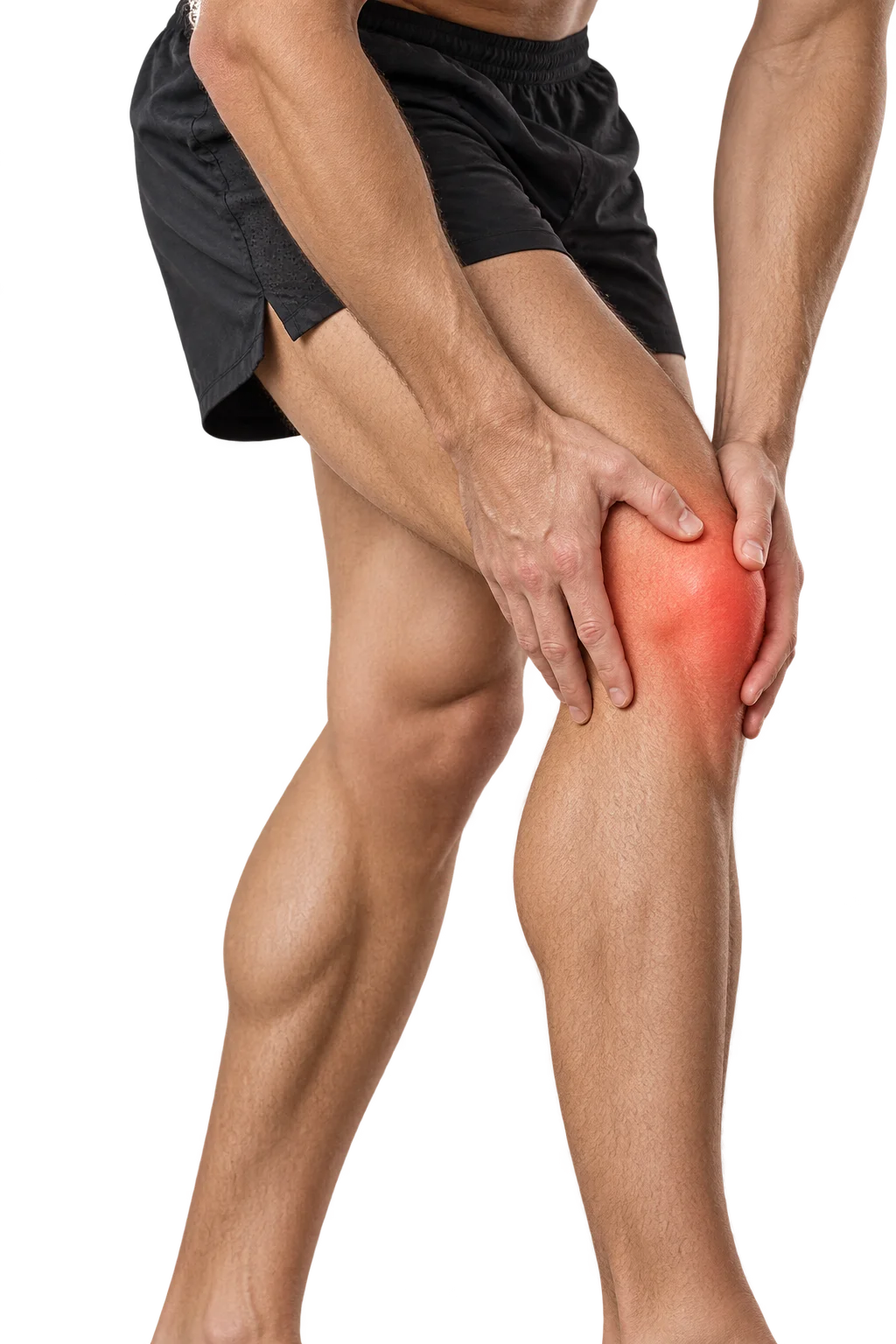
The pattern here is specific and recognizable: a regular runner who has had tight hip flexors or IT band tension for two or three years that responds to foam rolling and stretching during active training periods but never fully clears, and that becomes notably worse at higher training volumes or during race preparation. The cyclist with chronic tension in the thoracic spine and hip flexors that is present throughout the season regardless of how much stretching they do. The hockey player whose adductors and groin are consistently a limiting factor that massage helps temporarily but doesn't resolve. These presentations describe accumulated adhesion that has developed faster than recovery can clear it, and that has reached a degree of structural change where surface work no longer produces lasting improvement.
Montréal has a substantial active population that cycles the canal de Lachine path, runs along the Saint Lawrence waterfront from Verdun to LaSalle and through Jeanne-Mance Park on the Plateau, skates at outdoor rinks in NDG and Verdun through the winter, and trains in the gyms and pools of LaSalle, Côte-des-Neiges and Westmount. For this population, deep tissue massage as part of a regular training schedule — not only when something becomes acutely painful, but as a component of recovery maintenance — produces a meaningfully different training experience than treating massage as a last resort when the accumulation becomes unmanageable.

This is a real and common experience. A client has deep tissue massage, is sore for three days afterward, and the area that was treated feels no different or worse once the post-session soreness resolves. They're told this is normal. It's repeated several times with the same result. Eventually the client concludes either that deep tissue massage doesn't work for them or that their problem is simply too severe to improve. In the majority of cases, neither conclusion is accurate. What the client experienced was deep tissue massage applied incorrectly — rapid, forceful pressure that overloaded the tissue and produced inflammation rather than release. The soreness was inflammatory rather than the productive therapeutic response that genuinely effective deep tissue work produces.
The difference between productive post-session muscle soreness and inflammatory soreness is meaningful. Therapeutic soreness after effective deep tissue work is diffuse and muscular, similar to post-exercise soreness, and resolves within forty-eight hours while leaving the treated area notably better in quality. Inflammatory soreness from aggressive work is more localized, more tender to the touch and often feels worse in the treated area once it resolves rather than better. If your history with deep tissue massage matches the second description, that history is important information for your intake. A therapist who understands the distinction will work differently, and the session and post-session experience will be different as well.

Every deep tissue massage at Spa New You follows a specific sequence tailored to each appointment. Here is exactly what happens so you know what to expect before you arrive.
Before your session begins, your massage therapist completes the following:
The intake process is clinical work, not paperwork. The five minutes before treatment begins directly determines the quality of the treatment that follows.
The session begins with surface preparation — effleurage and light pétrissage over the primary regions to warm the tissue, increase local circulation and give the therapist an initial palpatory picture of the whole area before beginning deep work. Attempting to apply deep tissue techniques to cold, unwarmed tissue provokes defensive contraction rather than release. This is not a prolonged warm-up — it is a necessary clinical phase of the session that typically occupies the first five to eight minutes and transitions purposefully into the primary therapeutic work once the tissue is prepared.
The deep work begins with stripping strokes through the primary muscle groups identified during palpation. Using forearm, elbow, knuckles or thumbs depending on the region and the depth of tissue involved, the therapist applies slow, sustained pressure along the fiber orientation, sinking to the depth of restriction and moving through it at a pace that allows the tissue to yield rather than compressing through it rapidly. For the upper trapezius and cervical region — the most commonly treated area in our client population — the stripping work moves through the muscle from the occiput to the mid-belly, addressing the fascicles individually rather than compressing the whole muscle at once. For the thoracic and lumbar erectors, the stripping work moves from the thoracolumbar fascia insertion upward through each spinal level, with the therapist's pressure calibrated to the density of restriction at each segment.
Cross-fiber friction is applied to specific adhesion sites identified during palpation and during the stripping phase. This technique requires precise location — the friction is applied directly to the adhesion with enough pressure to engage the fibrous tissue, moving transversely across the fiber orientation to mechanically disrupt the cross-links while the area is maintained in a lengthened position. The technique is specific rather than diffuse: a centimeter to either side of the adhesion produces significantly less effect. This specificity is what produces the kind of durable tissue change that clients who have only received broad, deep pressure work have not experienced. The sensation during cross-fiber friction is typically the most intense of the session — a sharp, specific discomfort that most clients describe as distinct from pain and clearly localized to the adhesion site.
Trigger point work is integrated throughout the session wherever active trigger points are identified. Sustained ischemic compression holds pressure directly into the trigger point center until the referral pattern diminishes and the trigger releases — typically a hold of thirty to ninety seconds per site. The therapist monitors the client's breathing and the tissue quality under the contact throughout the hold, adjusting pressure to maintain engagement without provoking a defensive response. After the trigger releases, the therapist applies effleurage and light stretching to the muscle to reinforce the release and maintain the new tissue length while the nervous system integrates the change. The session closes with myofascial stretching and light effleurage over the treated regions, which supports circulation and reduces the degree of post-session inflammatory soreness by clearing the metabolic byproducts that the deep work mobilizes.
Deep tissue massage produces a different immediate post-session experience than Swedish massage. Rather than the immediate relaxation and nervous system calm that a Swedish session typically produces, the primary sensation following deep tissue work is often a muscular heaviness or mild fatigue in the treated areas, and in some cases a slightly heightened awareness of the areas where the most work was concentrated. This is normal. The deep tissue session has done physical work on the muscle — mobilizing adhesions, deactivating trigger points, disrupting fascial restrictions — and the tissue is responding to that work. Clients who expect to feel immediately relieved and relaxed the way they would after Swedish massage sometimes interpret this post-session feeling as a sign the treatment didn't work. It is the opposite: the tissue is doing what the session initiated.
The therapeutic benefit of the session typically becomes most apparent in this window, once the post-session soreness has resolved. Clients describe improved tissue quality in the treated areas — a different texture under their own hand, reduced tightness in the morning, improved movement through ranges that were previously restricted, and a reduction in the referred pain that was being maintained by trigger points that were deactivated during the session. This is the window to note and report at the next appointment, because the therapist uses this information to assess what changed, what needs further work and how to structure the subsequent session.
This is the window of peak post-session soreness for clients with significant adhesion work done. The soreness is muscular in quality — present on palpation and movement, diffuse rather than sharp, and localized to the regions treated. It is not a sign of injury. In the vast majority of cases it resolves fully within forty-eight hours. The practical implication is straightforward: don't schedule a deep tissue massage the day before an event that requires full physical output. Schedule it on a day where the following day can accommodate some residual muscle soreness without consequence. Some clients experience almost no post-session soreness even after significant deep tissue work. Others experience more notable soreness after sessions that treated particularly dense or long-standing adhesions. The degree of soreness correlates partly with how chronic and dense the restriction was, and tends to reduce with subsequent sessions as the tissue quality improves.
Post-session soreness that does not resolve within seventy-two hours, is increasing rather than decreasing, or is accompanied by swelling, localized heat, numbness, tingling or acute pain rather than diffuse muscular soreness warrants a call to the spa before your next appointment. These symptoms are not typical responses to deep tissue massage and indicate that the session may have been more aggressive than was appropriate for your tissue at that time, or that there is an underlying condition in the area that needs clinical attention. Bruising after deep tissue work is possible, particularly in clients who bruise easily, take blood thinners or have fragile skin. If significant bruising appears in a treated area, report it before the next session so the therapist can adjust the approach.
Deep tissue massage is cumulative work. One session produces a real change in the tissue. Multiple sessions build on that change progressively. The honest answer to how many sessions you need depends on how chronic the problem is, how dense the adhesion has become and what your objectives are. Here is how to think about it realistically.
If the restriction you're addressing has been present for less than a year, is concentrated in a specific region rather than widespread, and has not been fully resistant to other treatments, two to four sessions targeted specifically at the presenting area often produces significant and lasting improvement. The first session identifies the adhesion pattern, applies the primary deep work and produces the most noticeable change in tissue quality. The second and third sessions address what remains after the first session's changes have settled, targeting the deeper or more resistant layers that the first session made accessible. By the fourth session, many clients with early-stage presentations have achieved the tissue quality they were seeking and can transition to Swedish massage at a lower frequency for maintenance. This timeline is approximate and varies by individual tissue response.
For a presentation that has been present for two or more years, involves multiple regions, or has been resistant to treatment previously, a series of six to eight sessions spaced weekly or biweekly produces more reliable results than a smaller number of sessions. The first two sessions establish the tissue's response and identify the depth and distribution of the adhesion. Sessions three through five address the primary restriction patterns systematically as the tissue becomes more responsive and accessible. Sessions six through eight consolidate the gains and address secondary patterns that emerge as the primary restriction releases. This does not mean every client with a chronic presentation needs eight sessions — it means that entering the process with that horizon is more realistic than expecting four sessions to resolve what took years to accumulate.
Once the primary adhesion pattern has been resolved to the client's therapeutic goal, the question is how to maintain the improved tissue quality rather than allowing re-accumulation toward the same presentation. For most clients, monthly or bimonthly Swedish massage with quarterly deep tissue sessions targeting the areas with the highest re-accumulation tendency is an effective maintenance model. Clients who return to the same loading patterns — the construction worker, the desk worker, the endurance athlete — and whose presenting conditions are partly lifestyle-driven benefit from a maintenance model that treats the accumulation before it re-establishes the full original pattern rather than waiting for the problem to return to its worst state before seeking treatment again.
Your therapist gives you a specific recommendation after the first session based on what the tissue presented, how it responded to the treatment and what your therapeutic goals are. There is no minimum commitment and no package requirement. The recommendation is clinical and specific to your presentation, not a generic protocol.
Spa New You is at 3259 rue Saint-Jacques in Saint-Henri, accessible from across the Sud-Ouest borough and the western end of the island. Here is travel time from the neighbourhoods we serve most frequently.
By metro, take the orange or green line to Lionel-Groulx station — the only interchange point between both lines west of downtown — then bus 36 on rue Saint-Jacques heading west. The spa is three stops from Lionel-Groulx, approximately eight minutes by bus. The walk from the stop to our door is under two minutes.
Street parking is available on rue Saint-Jacques and surrounding Saint-Henri streets throughout the day. The block near the spa turns over regularly during operating hours. Parking meters apply on rue Saint-Jacques on weekdays. Adjacent residential streets are generally unrestricted on Sundays.
Spa New You is in the same neighbourhood as Marché Atwater, the chemin du canal de Lachine and Parc Marguerite-Bourgeoys. Clients come for deep tissue massage from across the island — from the Plateau-Mont-Royal (H2J, H2W), Mile-End (H2T), Rosemont (H1X, H2G) and the closer Sud-Ouest borough communities. The location is particularly convenient for clients who work near the MUHC complex near Atwater, in the Saint-Henri and Petite-Bourgogne commercial corridor, and in the Westmount business district. The physical demands of the construction and renovation work ongoing throughout the Notre-Dame and Saint-Jacques corridors also contribute to our client population of tradespeople and workers seeking therapeutic relief from sustained physical loading.
H4C (Saint-Henri), H4E (Côte-Saint-Paul), H4A (NDG west), H4B (NDG east), H4G (Verdun north), H4H (Verdun south), H8P (LaSalle north), H8R (LaSalle central), H3Y (Westmount south), H3Z (Westmount north), H3X (Côte-des-Neiges south), H3W (Côte-des-Neiges north), H3B (downtown west), H3G (downtown central), H3H (Shaughnessy Village), H2X (Chinatown / Milton-Parc), H2T (Mile-End south), H2J (Plateau-Mont-Royal), H2W (Plateau central), H1X (Rosemont)
Duration for deep tissue massage deserves specific guidance because the nature of the work is different from Swedish massage. Thirty minutes is targeted work on a single region — appropriate for a client maintaining a specific area already in progress, not a starting point for a new presentation with unknown scope. Forty-five minutes allows more complete treatment of one region and some work in adjacent areas. Sixty minutes is the minimum for a full-body assessment and focused deep tissue treatment of the primary complaint and associated regions. For a presentation involving multiple body regions or significant chronic adhesion, sixty minutes is often insufficient to do the primary work justice without rushing. Seventy-five and ninety minutes allow the therapist to work more thoroughly through each region without compressing the time in any one area. Ninety minutes is the recommended starting duration for new clients with chronic presentations involving multiple regions, because the first session requires time for palpation, assessment and deep tissue work that a sixty-minute session does not fully accommodate. One hundred and twenty minutes is for clients whose presentation involves widespread adhesion across several regions and who want the most comprehensive single-session treatment available.
Insurance receipts for reimbursement are available from FQM-member therapists . Coverage depends on your individual plan — most private health insurance plans in Québec that include paramedical or massage therapy benefits will reimburse deep tissue massage sessions with an FQM receipt. Verify your coverage with your insurer before the appointment, including whether a medical referral is required by your plan.
Spa New You deep tissue massage rates sit at the accessible end of professional massage therapy pricing in Montréal. Clinics and spas in Westmount, NDG and downtown frequently charge considerably more for comparable sixty-minute deep tissue sessions. The same fixed rate applies Monday through Sunday — no weekend surcharge, no holiday markup during standard appointment hours.
FQM membership and insurance-receipt availability vary by therapist. If you require an insurance receipt, please confirm your therapist’s membership and receipt availability when booking. Reimbursement depends on your insurer and policy.
Our massage therapists specializing in deep tissue massage:
When you call to book, describe your primary complaint in specific terms — where it is, how long it has been present, what you have already tried and what the outcome was. This information lets us match you with the therapist whose availability and clinical orientation fits your presentation most closely. If you have a preference for a specific therapist, male or female, or a specific pressure style or clinical approach based on previous sessions, tell us when you call and we do our best to accommodate it.
Editor's note: These are representative composite cases based on typical presentations. No individual is identified.
A client from LaSalle (H8R) in his late thirties had managed persistent low back pain for four years that developed gradually over his working career in construction. He had undergone lumbar imaging that excluded disc pathology and structural diagnoses — the assessment confirmed the problem was in the soft tissue. He had completed physiotherapy, been given exercises that helped when he did them consistently but produced no lasting change in the underlying quality of the pain, and tried Swedish massage several times with temporary relief that faded within a few days. He worked a physically demanding job five days a week and described the low back pain as his constant baseline — sometimes worse after heavy weeks, never fully absent.
The intake at Spa New You identified a presentation consistent with chronic myofascial restriction in the thoracolumbar erectors bilaterally, dense trigger points in the right quadratus lumborum referring into the hip, and shortened hip flexors contributing to an anterior pelvic tilt that was increasing the load on the lumbar structures continuously. The therapist explained that the Swedish massage he had previously received was working at the surface of the problem — addressing the superficial tension that accumulated on top of the underlying restriction — which is why the relief was real but temporary. The deep tissue work would target the structural changes in the tissue directly, and the first session would give both the therapist and the client useful information about how the tissue responded.
The first ninety-minute session worked through the thoracolumbar erectors bilaterally with stripping strokes and cross-fiber friction, deactivated the quadratus lumborum trigger points on both sides, and addressed the hip flexors in a side-lying position. The client reported that the sensation during the quadratus work was intensely specific — he recognized the referred pattern immediately as the pain he had been carrying for years. The post-session soreness over the following two days was notable but resolved completely. By day four, he described the low back as having a different quality than it had in years — not absent, but genuinely reduced and with a different texture.
He completed six sessions over eight weeks. By the fourth session, the therapist noted significantly improved tissue quality in the erectors and a complete resolution of the right quadratus trigger point. The client reported that the daily low back pain had reduced substantially — present on heavy work days, absent on rest days, and at a meaningfully lower level on average than the baseline he had managed for four years. He moved to monthly maintenance sessions combining Swedish and targeted deep tissue work in the lumbar region. His experience is representative of a presentation that does not resolve with surface work because the problem is structural, and that responds progressively to the right targeted approach across a realistic series of sessions.
A client from Plateau-Mont-Royal (H2J) in his early thirties was an avid cyclist who commuted by bike for most of the year and rode recreational distance routes through the canal de Lachine path, the south shore and the Laurentians on weekends. He had managed right-sided IT band syndrome for two cycling seasons — lateral knee pain that started at approximately forty-five minutes of riding, progressed to limiting his output if he continued, and that resolved with rest only to return at the same point in the next ride. He had tried foam rolling, stretching, a bike fit assessment and temporary rest without achieving a lasting change. He was considering whether the issue was structural enough to warrant imaging.
The intake identified the likely picture before palpation began: sustained cycling volume places the IT band under repetitive compressive load at the lateral knee, and the tensor fasciae latae and gluteus medius — the muscles that control IT band tension — accumulate restriction in the majority of cyclists with this presentation. Palpation confirmed bilateral TFL trigger points with the right significantly more active, dense adhesion in the proximal IT band and significant restriction in the right piriformis and external hip rotators contributing to the altered mechanics that were placing the IT band under excess tension. The client had been addressing the symptom — the lateral knee pain — without addressing the source of the tension generating it.
The first session focused on the right TFL, gluteus medius and the proximal IT band, with cross-fiber friction applied along the length of the adhesion and trigger point work in the TFL belly. The sensation in the TFL work was the most intense of the session — the client described it as the most directly specific pain he had experienced in that area in two years of having the problem. After the session, the lateral knee pain was notably reduced on his next ride. After the third session, he completed his first full two-hour ride without onset of the lateral pain.
Four sessions resolved the primary presentation. The client reported at the fourth session that his riding felt mechanically different — less compensatory tension in the hip, more power transfer through the pedal stroke, and a subjective sense that the right side was moving the way it used to. He continued with monthly maintenance sessions through the cycling season targeting the TFL and hip rotators. This presentation is common among Montréal cyclists whose accumulated riding volume outpaces their recovery, and it responds well to targeted deep tissue work at the actual source of the restriction rather than at the symptomatic structure.
A client from Westmount (H3Z) in her early forties had been receiving Swedish massage monthly for several years to manage chronic upper trapezius and posterior cervical tension from years of desk work in a professional services environment. The Swedish massage was helpful and she valued it — it consistently produced temporary relief and made the tension manageable. What it had never done was change the underlying quality of the tissue. She described the trapezius as having the same quality for years regardless of how frequently she received treatment — a persistent, dense holding that the Swedish work softened temporarily but that returned within a week to the same baseline. A colleague suggested she try deep tissue and she booked with specific scepticism about whether it would produce anything different.
The intake identified the specific clinical picture: the upper trapezius bilaterally had the palpatory quality of chronic adhesion rather than simple hypertonicity — dense, fibrous, resistant to gentle compression in a way that chronic restriction characteristically is. The posterior cervical muscles had active trigger points in the right suboccipital group that were likely contributing to the right-sided headaches she had mentioned but had not listed as her primary complaint. The fascia over the upper back had a quality of restriction that Swedish techniques do not address effectively. The therapist explained the distinction between what Swedish massage had been doing — addressing the surface tension and producing the temporary relief she experienced — and what deep tissue work would target: the structural changes in the tissue that had been building for years and were not affected by surface treatment.
The first session used deep stripping strokes through the upper trapezius bilaterally and sustained trigger point work in the right suboccipital group. The client reported that the sensation during the suboccipital work was notably different from anything she had experienced in previous massage — a precise, specific pressure that triggered the familiar right-sided head tension and then released it during the hold. The post-session soreness was significant — she was noticeably sore for nearly forty-eight hours. When the soreness resolved, she described the tissue quality as genuinely different from her normal baseline for the first time she could remember.
She completed five sessions over ten weeks. The improvement was incremental and progressive — each session found less primary resistance in the trapezius, addressed deeper adhesion layers that the first session had not reached, and produced a smaller post-session soreness response as the tissue quality improved. By the fifth session, the therapist noted tissue quality in the upper trapezius that was fundamentally different from the first session's findings. The client reported that the daily neck and shoulder awareness she had normalized for years was substantially reduced, and that the right-sided headaches had not occurred since the second session. She moved to a bimonthly model alternating Swedish and deep tissue sessions. This case illustrates the pattern that brings many long-term Swedish massage clients to deep tissue: not because the Swedish wasn't helping, but because it was never reaching the structural layer where the problem actually lived.

The difference is technique, depth and clinical purpose — not just pressure level. Swedish massage uses five surface-to-intermediate techniques applied progressively across the whole body to address muscle tension, improve circulation and regulate the nervous system. It is effective for a wide range of presentations and is the most applicable treatment for accumulated postural and stress tension. Deep tissue massage uses different techniques — slow stripping strokes at depth, cross-fiber friction targeting adhesions, sustained trigger point compression, myofascial release work — applied with clinical specificity to structural changes in the deep muscle tissue and fascia. It is the more appropriate choice when the problem involves chronic adhesion, trigger points with referred pain patterns, fascial restriction or structural changes in the tissue that have not responded to surface work. The practical guide: if Swedish massage produces real relief that holds for a week or more, continue with Swedish massage. If Swedish massage produces temporary relief that fades within a few days and the tissue quality never changes, the problem likely involves deep structural restriction that needs deep tissue work to address.
No — and the misconception that it should be painful is one of the most common reasons clients have poor experiences with deep tissue work. Effective deep tissue massage involves specific, sustained pressure at depth that triggers the autogenic inhibition response and produces genuine tissue release. That sensation is distinct from typical Swedish massage pressure and many clients describe it as intense, specific and different from surface work — but it is not pain in the sense of sharp, acute or escalating discomfort. The critical distinction is between productive therapeutic discomfort — a specific, localized pressure that the client can breathe through and that produces a sense of targeted engagement — and counterproductive defensive pain — pressure that causes the muscle to contract against the contact, tighten rather than release, and produces inflammation rather than therapeutic change. Deep tissue massage applied correctly works with the tissue's response, not against it. If you are leaving deep tissue sessions consistently more tense and more sore without improvement in the treated area, you are not experiencing effective deep tissue work.
Most clients experience post-session soreness similar in quality to post-exercise muscle soreness — present on palpation and movement, diffuse rather than sharp, and resolving within forty-eight hours. The degree of soreness correlates roughly with how chronic and dense the restriction was in the treated area, how long it has been since the client received deep tissue work, and how much trigger point work was concentrated in the session. First sessions with long-standing presentations typically produce more notable post-session soreness than subsequent sessions as the tissue quality progressively improves. Clients who routinely experience severe soreness lasting more than three days after deep tissue sessions should communicate this at the next intake — it indicates the pressure calibration needs adjustment toward a depth that the tissue can respond to without being overloaded.
Most clients notice a meaningful change after the first session — not necessarily complete resolution, but a genuine shift in tissue quality and symptom level that confirms the treatment is addressing the actual problem. The full response to a first session is typically most apparent three to five days after, once the post-session soreness has resolved. For early or moderate presentations, two to four sessions produce significant improvement. For chronic presentations with long-standing adhesion, a realistic series is six to eight sessions to achieve the target tissue quality. The pace of improvement is specific to the individual — some presentations respond quickly in the first two sessions, others require more sessions to work through the depth and distribution of the restriction. Your therapist gives you an honest assessment of the likely trajectory after the first session based on what the tissue presented and how it responded to treatment.
The answer depends entirely on the specifics of your diagnosis, current symptom status and what is being proposed for the session. Deep tissue massage to the muscles adjacent to and remote from the involved spinal level is generally safe and often clinically valuable — treating the muscular tension and spasm that develops around a disc injury is part of a complete management approach. Direct deep pressure over the site of the herniation, percussive techniques near the involved level or any technique that loads the spine in flexion or extension with a compromised disc is contraindicated without medical clearance. Bring your diagnosis documentation to the intake and communicate your current symptom picture clearly — specifically any neurological symptoms including pain radiation, numbness or tingling in the extremities, because these indicate active nerve involvement that requires modified treatment. A therapist with appropriate training structures the session to work the surrounding musculature without endangering the primary injury site. If you are unsure whether massage is appropriate given your specific diagnosis, consult the clinician managing your spine condition before booking.
Yes, for a specific category of headache — tension-type headaches that are maintained or triggered by active trigger points in the posterior cervical, suboccipital and upper trapezius muscles. This category is extremely common, particularly in the Montréal population of desk workers, screen users and people who carry significant stress in the neck and shoulder region. The mechanism is straightforward: active trigger points in the suboccipital group and upper cervical muscles maintain referred pain patterns directly into the head, and deactivating those triggers through sustained ischemic compression reduces or eliminates the referred pain. Clients who have managed regular headaches for years, have had imaging that excluded structural causes and have not found lasting relief through medication alone often experience significant improvement in headache frequency and severity when the trigger point patterns maintaining them are addressed through deep tissue work in the cervical and suboccipital region. Deep tissue massage is not a treatment for migraine with neurological aura, cluster headaches or headaches with a known vascular or structural cause — those presentations warrant medical management and the massage therapy component should be coordinated with the treating physician.
The practical guide is whether your current treatment is producing lasting change or only temporary relief. If Swedish massage, stretching or exercise produces real improvement that holds for a week or longer, Swedish massage is addressing your problem effectively and is the right treatment for your presentation. If those approaches produce temporary relief that fades within a few days and the underlying tissue quality never changes, the problem involves structural restriction that needs deep tissue work. The clearest indication for deep tissue over Swedish is a specific area of chronic restriction — present for months to years, palpably dense, resistant to surface treatments — combined with either referred pain patterns that suggest active trigger points or a history of injury or overuse in that region. When you call to book, describe your situation to the person you speak with and we will help you determine which approach fits your presentation and whether a combination of both in a single session is appropriate.
Deep tissue massage is a clinical massage technique that uses slow, sustained stripping strokes at depth, cross-fiber friction, sustained trigger point compression and myofascial release work to target structural changes in the deep layers of muscle tissue and fascia — specifically adhesions, trigger points and fascial restrictions that develop from chronic overuse, injury, postural loading or sustained stress. It is distinct from Swedish massage in both technique and purpose. Swedish massage addresses surface and intermediate muscle tension, improves circulation and regulates the nervous system. Deep tissue massage targets the structural changes in the tissue itself — the fibrous, restricted areas that do not respond to surface work and that maintain chronic pain patterns, restrict movement and perpetuate holding patterns that recur regardless of how frequently the surface tension is treated.
The two services use different techniques targeting different tissue layers for different clinical purposes. Swedish massage uses effleurage, pétrissage, friction, tapotement and vibration applied progressively across the body surface, treating intermediate muscle tension, improving circulation and activating the parasympathetic nervous system. Deep tissue massage uses slow stripping strokes at depth, cross-fiber friction applied transversely across adhesion sites, sustained ischemic compression into trigger points and myofascial release work on the fascia itself. Swedish massage is appropriate for most presentations involving accumulated postural and stress tension. Deep tissue massage is indicated when the tissue has undergone structural change — adhesion, trigger point formation, fascial restriction — that surface techniques cannot adequately reach or resolve. Many clients benefit from both, used in different sessions or combined within a session depending on what their tissue presents.
A deep tissue session at Spa New You begins with an intake conversation covering your primary complaint, history, relevant medical information and pressure preferences. The session starts with surface preparation to warm the tissue before the deep work begins. The primary therapeutic work uses slow, targeted strokes and sustained holds that feel different from Swedish massage — more specific, more focused on particular structures rather than flowing across the whole surface. The sensation in areas with significant adhesion or active trigger points is typically the most intense part of the session — specific, localized and distinct from diffuse surface pressure. Post-session soreness is expected and normal. The full therapeutic benefit is typically most apparent three to five days after the session.
Effective deep tissue massage involves sustained, specific pressure at depth that most clients describe as intense and targeted rather than simply pleasant, but it should not be acutely painful. The critical distinction is between therapeutic discomfort — specific, localized, breathable, producing a sense of targeted engagement with a known restricted area — and defensive pain — sharp, escalating pressure that causes the muscle to contract against the contact. Deep tissue massage that is effective engages the first category. If you experience the second, tell your therapist immediately. The pressure is calibrated in real time throughout the session and adjusts to what your tissue is actually showing, not to a predetermined level. You should be able to breathe normally throughout the session.
Arrive with a clear description of your primary complaint — specifically where the problem is, how long it has been present, what makes it better or worse and what treatments you've already tried. Drink adequate water on the day of the appointment. Avoid heavy exercise immediately before the session. Come in clothes you can change out of easily, as you'll be on the table in minimal clothing or undergarments with complete draping. If you have imaging reports, physiotherapy assessments or medical notes relevant to your complaint, bring them or mention them at intake. Tell the therapist at intake about all medications you're taking, particularly blood thinners, anti-inflammatories and any medication that affects skin fragility or blood pressure, as these affect technique selection and depth of work.
Yes, within a specific framework. Deep tissue massage is appropriate for the chronic muscular and fascial consequences of sports injuries once the acute phase has passed — typically four to six weeks post-injury for mild to moderate soft tissue injuries, longer for more significant injuries or post-surgical recovery. The acute phase of an injury involves active inflammation and healing that deep tissue work disrupts rather than supports. Once the tissue is in the remodelling phase, targeted deep tissue work to address the scar tissue, adhesion and trigger point patterns that develop as the injury heals produces significantly better outcomes than leaving those patterns to consolidate. Clients managing sports injuries should coordinate with the practitioner overseeing their injury recovery to determine when soft tissue work is appropriate and what areas to avoid or modify.
Yes, and the intake process specifically identifies them. Absolute contraindications for deep tissue work in the affected area include: deep vein thrombosis or any confirmed or suspected blood clot; active skin infections, open wounds or rashes in the treatment area; acute inflammation — characterized by heat, swelling, redness and acute pain — as opposed to chronic inflammation; areas within the early weeks of post-surgical healing; bone fractures or acute musculoskeletal injuries in the healing phase; and clients on anticoagulant medication, where deep manual pressure significantly increases bleeding risk. Relative contraindications requiring modification include osteoporosis, which requires technique modification to avoid fracture risk from deep pressure; inflammatory arthropathies in active flare; cardiovascular disease with specific restrictions; and pregnancy, which requires specific positional modification and avoids abdominal and certain lower back work. Divulge your complete health history at intake. The therapist identifies what requires modification and structures the session accordingly, or refers you to medical clearance if the situation warrants it.
For an acute presentation being treated actively, weekly or biweekly sessions produce faster progress than wider spacing, because each session builds on the previous session's changes before the tissue has had time to re-establish the pattern. Once the primary restriction has been resolved to the therapeutic target, monthly maintenance with deep tissue in the highest-accumulation areas is a sustainable model for most clients. The practical guide is to space sessions such that you are coming back while the improvement from the last session is still present, not after the tissue has fully returned to its previous quality — that spacing produces cumulative progress rather than repeatedly addressing the same re-established pattern.
For lower back pain confirmed as muscular and soft tissue in origin — which is the majority of chronic low back pain in adults — deep tissue massage targeting the specific muscle groups and structures maintaining the pain is one of the most direct treatment approaches available outside of physiotherapy. The specific muscles most commonly involved in chronic low back pain — the erector spinae, quadratus lumborum, and the hip flexors and external rotators that contribute to the postural mechanics loading the lumbar structures — are all accessible to deep tissue work and respond to the targeted techniques when the adhesion and trigger point patterns are specifically addressed. The condition that significantly improves outcomes is a clear intake picture: the more specific the information about where the pain is, its quality, radiation pattern, aggravating and relieving factors and treatment history, the more precisely the therapist can target the structures maintaining it. Lower back pain that involves neurological symptoms — radiating pain into the leg, numbness, tingling — requires disclosure at intake and a modified approach that avoids direct deep pressure over the spinal levels involved.
Call (514) 750-7070. We're open Monday through Sunday from 10:30 AM to 8:30 PM. Tell us your primary complaint and how long it has been present, and we can recommend the appropriate session duration. If you have a history of previous deep tissue work — whether positive or negative — tell us that when you call. We match you with a therapist whose availability and clinical orientation fits your presentation, and confirm there are no intake questions to address before your appointment. There is no online booking form. A phone call takes two to three minutes and gives you a direct conversation about whether the session fits what you are coming in to address.
Call (514) 750-7070. Tell us where the problem is, how long it has been there and what you have already tried. We confirm the appointment, match you with a massage therapist available for your chosen session duration, and answer any clinical questions before you arrive.
Open seven days a week from 10:30 AM to 8:30 PM. Same fixed rates every day with no weekend surcharge. Professional deep tissue massage in Saint-Henri, accessible from NDG, Verdun, LaSalle, Westmount, Côte-des-Neiges and across the island of Montréal. Insurance receipts available from FQM-member therapists.
Same-day appointments require a phone call.
Please call (514) 750-7070 to confirm availability.
Give your body a little extra care this year. Call or book your visit to claim your free hour.